Wie ich innerhalb eines Wochenendes mit Triverse AI einen Prototyp mit 100 Assets für ein stilisiertes Überlebensspiel mit Enten baute
Devon Hale, ein einzelner Gameplay-Programmierer, erstellte an einem Wochenende einen Prototyp mit 100 Assets für seinen stilisierten Survival-Shooter mit Enten. Kein Art-Team, keine marathonartigen Blender-Sessions. Wie hat er das geschafft?
4. August 2026
Treffen Sie Devon Hale, einen Gameplay-Programmierer, der an einem Wochenende einen Vertical Slice für einen stilisierten Enten-Survival-Shooter entwickelt hat. Der Arbeitstitel lautet „Mallard Mayhem", doch dieser könnte bis nächsten Dienstag bereits geändert sein. Was real ist, ist der Prototyp: eine Low-Poly-Welt mit Wäldern, einer verlassenen Industrieanlage und einem kleinen Dorf, alles bevölkert von feindlichen Enten und den Requisiten, die man tatsächlich benötigt, um dem Ort ein lebendiges Gefühl zu verleihen. Einhundert Assets. Eine Person. Kein Art-Team, kein Outsourcing, kein schlafloser Monat in Blender. Nur Triverse AIs 3D-Generierung und eine hartnäckige Idee.
Was der Prototyp ist und wie er entstand
Devon ist mit alten Lightgun-Spielen im Stil von Duck Hunt aufgewachsen und wollte schon immer etwas in diesem Genre entwickeln, aber größer. Keine flache Spielfläche, auf der Enten auftauchen. Stattdessen eine kleine, dichte Welt, die man erkunden kann, in der Enten die Gegner sind und die Umgebung ebenso viel zum Storytelling beiträgt wie der Kampf.
Die Idee für das Wochenende war einfach: Einen spielbaren Ausschnitt mit drei verbundenen Bereichen zu erstellen. Ein Waldweg mit Felsen und einer Holzbrücke. Ein Industriegebiet mit Frachtcontainern und Zäunen. Ein Dorf mit Häusern, einem Wachturm, einem Lagerfeuer und einem rostigen Pickup-Truck. Drei Zonen, ein einheitlicher Stil und genug Requisiten, damit sich der Spieler nicht auf dem Nichts, sondern an einem Ort befand.
Er hatte schon früher an Game-Jams teilgenommen. Sie endeten immer gleich: eine knifflige Kampfschleife, ein halbfertiges Level und eine Asset-Liste, die wie eine Strafe wirkte. „Ich plante mit dreißig Objekten und merkte dann, dass ich noch neunzig weitere brauchte, nur damit der erste Bereich nicht wie eine Leere aussah."
Der Ressourcen-Engpass eines Wochenendbuilds
Die Rechnung bei 100 Assets ist für eine Person brutal. Selbst bei großzügigen zehn Minuten pro Modell kommt man auf sechzehn Stunden reine Modellierungsarbeit, bevor es ans Gameplay geht. Und zehn Minuten sind utopisch. Echte Low-Poly-Assets mit sauberer Topologie dauern eher eine Stunde pro Stück, wenn man die Retopologie mitzählt, diesen Schritt, vor dem niemand warnt, bis dein Mesh beim Import explodiert.
"Das ist das Tückische", sagt Devon. "Generatoren geben dir eine Form in dreißig Sekunden. Dann verbringst du zwei Stunden damit, die Topologie zu korrigieren, damit Unity nicht abstürzt. Der schnelle Teil war nie das Problem. Die Bereinigung ist der langsame Teil."
Für ein Wochenendprojekt ist das ein Nichtstarter. Entweder man liefert zehn Assets ab und nennt es einen Prototypen, oder man macht Abstriche und liefert Müll ab, der bei leichtem Druck in sich zusammenfällt. Devon hatte beides getan. Keines davon fühlte sich wie die Welt an, in der er sich aufhalten wollte.
Wie Triverse AI in die Pipeline integriert ist
Devon stieß über eine Discord-Empfehlung auf Triverse und probierte spontan den Artist Mesh-Modus aus. Es handelt sich um einen Generierungsmodus, der saubere, spielbereite Topologie erzeugt, statt des üblichen skulptierten Klumpens, der anschließend aufwendig retopologisiert werden muss. Das Argument, das ihn überzeugte: In etwa zwanzig Sekunden ein Mesh mit strukturiertem Kantenfluss generieren, ein Vertex-Budget auswählen und direkt in Unity exportieren – ohne Retopologie-Schritt.
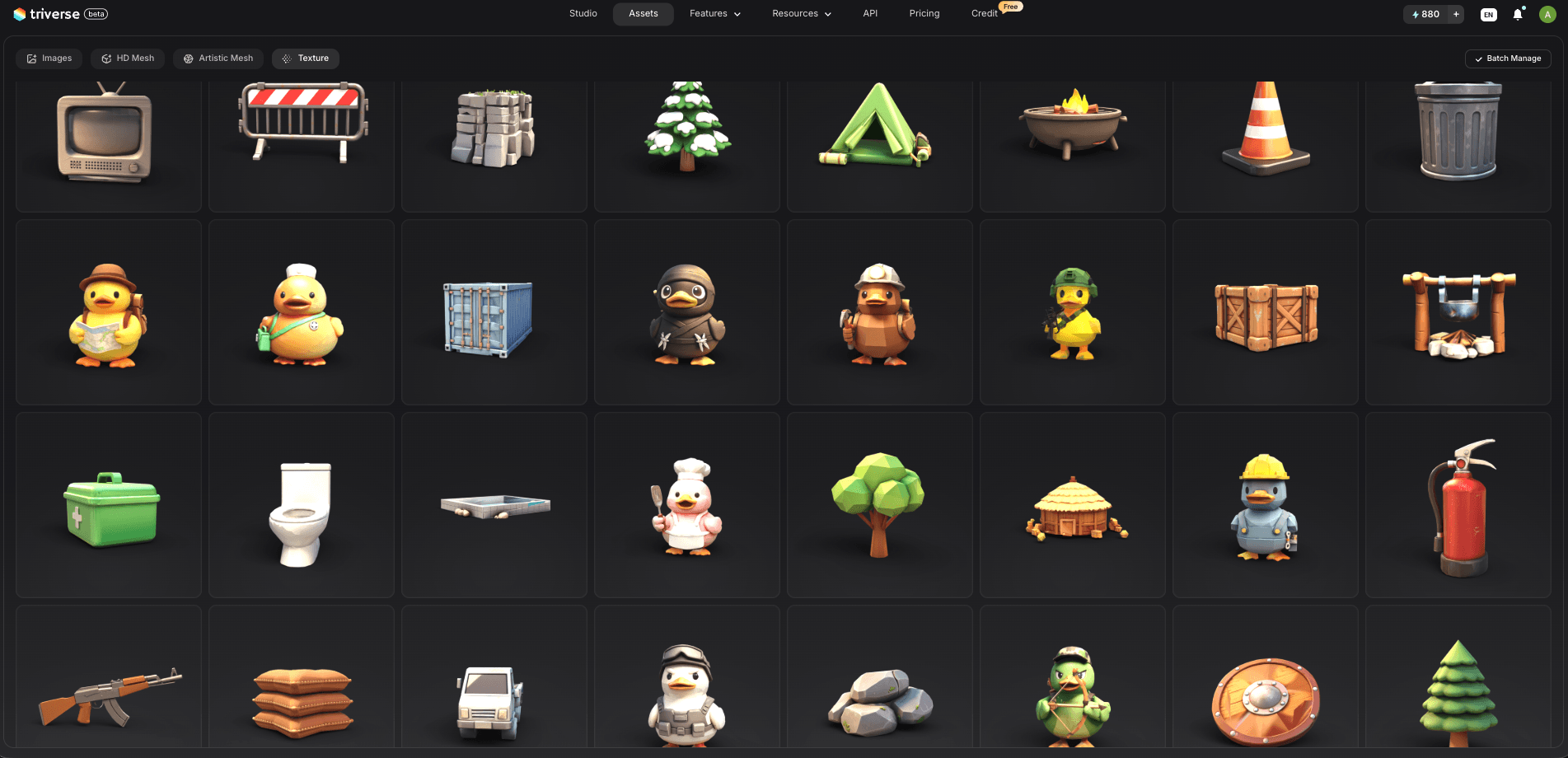
Sein eigentlicher Workflow am Wochenende entpuppte sich in seiner Einfachheit als fast schon peinlich:
- Führen Sie das Asset auf.Was benötigt der aktuelle Bereich? Eine Kiefer, eine Steinformation, eine Holzbrücke, ein Container.
- Referenzbilder stapelweise generieren.Bevor er in die 3D-Modellierung einsteigt, definiert Devon die künstlerische Ausrichtung. Er gibt einem Bildtool wie ChatGPT, Midjourney oder Triverses eigener integrierter Bildgenerator, um eine ganze Reihe von Konzeptbildern im selben Stil über die Assetliste hinweg zu erstellen, sodass jedes Asset ein einheitliches Erscheinungsbild hat, bevor überhaupt ein Mesh erstellt wird.
- Bild in 3D. Er lädt diese Referenzbilder in den Triverse Artist Mesh-Modus, der aus dem Bild das 3D-Low-Poly-Mesh generiert.
- Wählen Sie eine Variante.Triverse bietet vier Optionen pro Generation, also wählt er die mit der saubersten Silhouette.
- Vertex-Ebene festlegen. 1.024 für Hintergrundgerümpel, 2.048 für Mittelgrund-Objekte und 4.096 für alles, was der Spieler direkt berührt.
- Struktur geben. PBR maps bis zu 4K, üblicherweise 2K für einen Prototyp.
- Exportieren Sie FBX oder GLB Nahtlos in Unity, ohne lästige Konvertierungsschritte.
Einige tatsächliche Prompts zur Bildgenerierung, die er verwendet hat:
Ein stilisierter Low-Poly-Tannenbaum mit weichem grünen Nadelkleid, Game-Asset, Flat Shading, zentriertEin Haufen grauer Felsen mit Moospolstern, Low-Poly-Spielobjekt, handbemalte TexturEine hölzerne Seilbrücke, stilisiertes Spiel-Asset, saubere TopologieEin blauer Frachtcontainer mit Rostflecken, lowpoly industrielles Game-AssetEin hölzerner Wachturm mit einer Leiter, stilisiertes SpielelementEin Lagerfeuer mit Steinen drumherum, Low-Poly, handgemalte TexturEin rostiger Pickup-Truck im Low-Poly-Stil und spielfertigEine Holzkiste mit Metallwinkeln, Spielprop, flache Schattierung (Flat Shading)Ein Dorfhaus mit rotem Dach und Holzwänden, im Low-Poly-StilEine Pumpgun mit Holzschaft, stilisierte Spielwaffe
Der entscheidende Faktor für den Erfolg des Survival-Spiels war die Konsistenz. Waldfelsen, Industriecontainer und Dorfhäuser müssen so wirken, als gehörten sie alle zum selben Prototyp. Durch die Generierung aller Elemente mit demselben Werkzeug und derselben künstlerischen Richtung blieb der Stil einheitlich. „Den gesamten Übergang vom Wald zum Dorf habe ich an einem einzigen Samstag erstellt. Früher hätte das eine Woche bedeutet, in der ich mich in Blender zum Verzweifeln gebracht hätte."
Was Triverse AI am Prototypen verändert hat
Der offensichtlichste Unterschied ist das Tempo. Devons Asset-Liste wurde aus einem für dieses Wochenende unmöglichen Vorhaben bis Sonntagabend erledigt, mit ausreichend Zeit zum Testspielen. Doch was wirklich zählte, war nicht der Zeitfaktor. Es war die Tatsache, dass die Assets als zusammenhängende Welt funktionierten. Sie waren keine Platzhalter mehr, die auf einen nicht existierenden 3D-Modellierer warteten. Sie waren in Unity integriert, korrekt beleuchtet, und ließen den Prototyp wie einen echten Ort wirken, den man weiter ausbauen konnte.
"Seltsamerweise hat niemand, der den Spielabschnitt gespielt hat, gefragt, ob die Modelle KI-generiert seien. Sie fragten, ob das Dorf auf einer realen Stadt basiere. Das ist der Test. Wenn das Objekt einfach als ein natürlicher Bestandteil der Spielwelt wahrgenommen wird, hast du deine Arbeit richtig gemacht."
— Devon Hale, Unabhängiger Spieleentwickler
Die größere Veränderung war kreativer Natur. Wenn ein Asset zwanzig Sekunden statt eines ganzen Nachmittags kostet, werden ausgefallene Ideen nicht mehr verworfen. Devon fügte eine Zugbrücke für den Waldausgang hinzu, einen halb versunkenen Pool hinter dem Industriegelände, eine Reihe von Frachtkisten, die wie Deckung aussahen, und einen zerfallenden Holzzaun rund um das Dorf. Alles Dinge, die er bei einem normalen Build verworfen hätte, weil die Modellierung zu aufwendig gewesen wäre. In einem Durchlauf generiert, landeten sie direkt im Spiel.
Seine einzeilige Version des Effektes: „Ein Stein wird zu einem Weg. Ein Weg wird zu einer Zone. Eine Zone wird zu einer Welt.“
Er sieht die Grenzen klar, was teilweise erklärt, warum die Geschichte standhält. Heldenwaffen und der Spielcharakter erfordern nach wie vor Handarbeit. Hochdetaillierte Hauptelemente profitieren von einer Bearbeitung in einem speziellen Werkzeug. Und er behauptet nicht, dass Triverse seinen Geschmack oder seinen Code ersetzt hat.
"Es schloss die Lücke zwischen dem, was ich mir vorstellen konnte, und dem, was ich umsetzen konnte. Das ist es. Das ist der springende Punkt."
—— Devon Hale, Indie-Spieleentwickler*in
Nächste Schritte für den Prototyp und Tipps für Hobbyentwickler
Mallard Mayhem ist noch immer nur ein Arbeitstitel für einen Prototyp von einem Wochenende. Devon hat noch nicht entschieden, ob daraus ein vollständiges Spiel wird. Der nächste Schritt ist ein weiterer Vertical Slice, vielleicht mit einer vierten Zone und echten Enten-Gegnervarianten, wobei dieselben hundert Assets als Grundlage dienen.
Dieser Rat richtet sich an Solo-Entwickler, erfahrene Game-Jam-Teilnehmer und alle, die eine gute Idee aufgegeben haben, weil sie von der Asset-Liste abgeschreckt wurden. Betrachten Sie das Modell nicht als den schwierigen Teil. Der schwierige Teil ist die Welt. Überlassen Sie einem Tool die Geometrie, stellen Sie sicher, dass nur hochwertige Inhalte veröffentlicht werden, und der Wochenend-Prototyp hört auf, ein Traum zu bleiben.
"Man braucht kein Studio, um eine Welt zu erschaffen, die echt wirkt; man braucht nur eine Idee, eine Frist und einen Generator, der einem keine schlechte Topologie liefert. Zwei davon hatte ich. Triverse hat das dritte gelöst."
— Devon Hale, Indie-Spiele-Entwickler