What is 3D Art? Is 3D Art Still Worth It in 2026?
January 30, 2026
If you’ve been doom-scrolling through r/3Dmodeling or r/ArtistLounge late at night, you’ve felt it. The panic. The burnout. The Reddit post titled "The Nightmare of Being a 3D Artist" isn't just complaints—they are valid reactions to a massive industry shift.
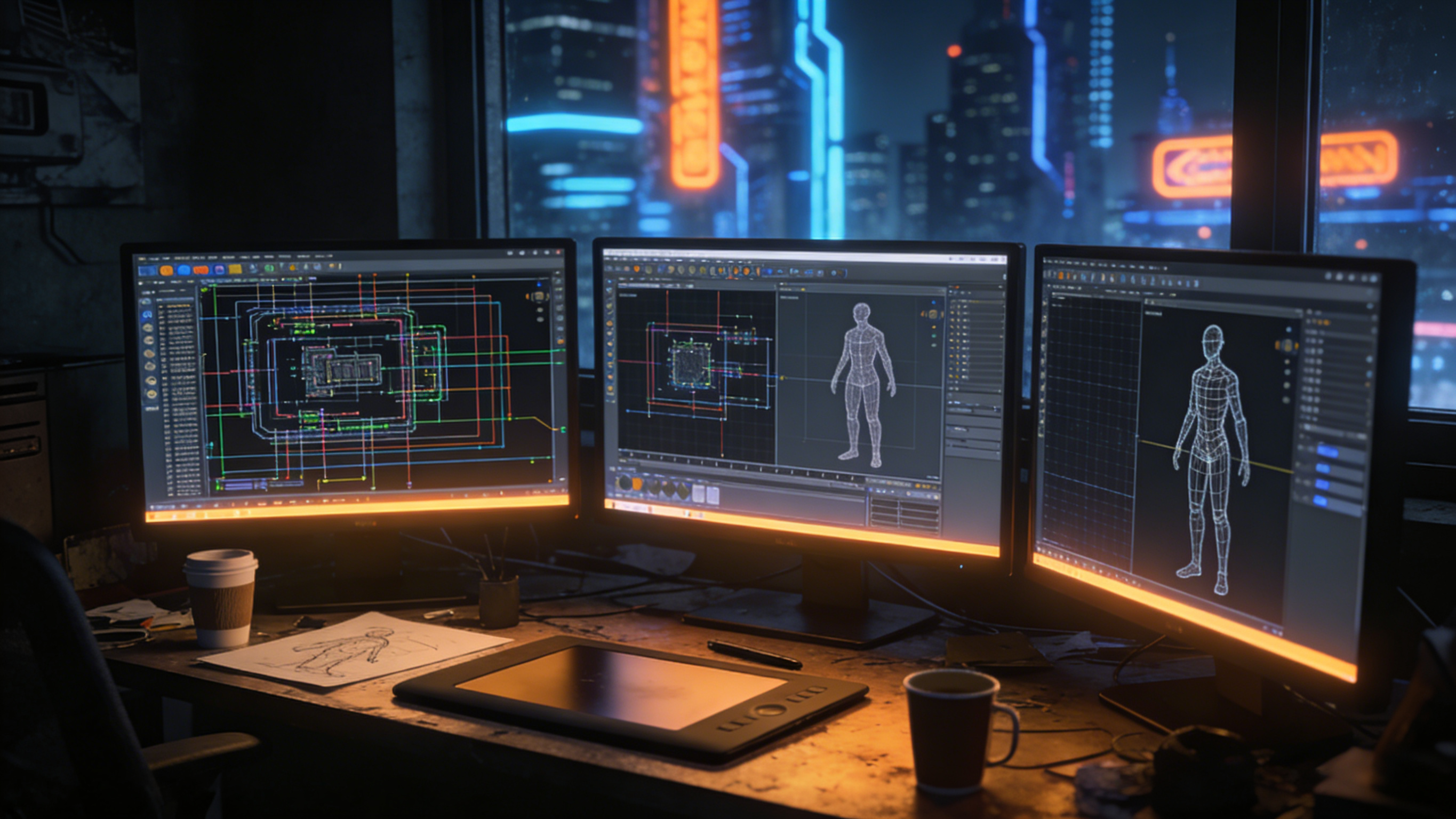
It is 2026. The paradox is brutal. On one hand, the global 3D market is skyrocketing to $36.72 billion. Demand for digital assets in games, e-commerce, and XR is higher than ever. On the other hand, individual artists are facing burnout, layoffs, and the crushing weight of skill requirements.
So, is the 3D artist still worth it? Let's dive in!
2D VS 3D Art: Why 3D Feels Easier
There's a debate on Reddit that drives traditional artists crazy: Why does 3D art sometimes look easier than 2D?
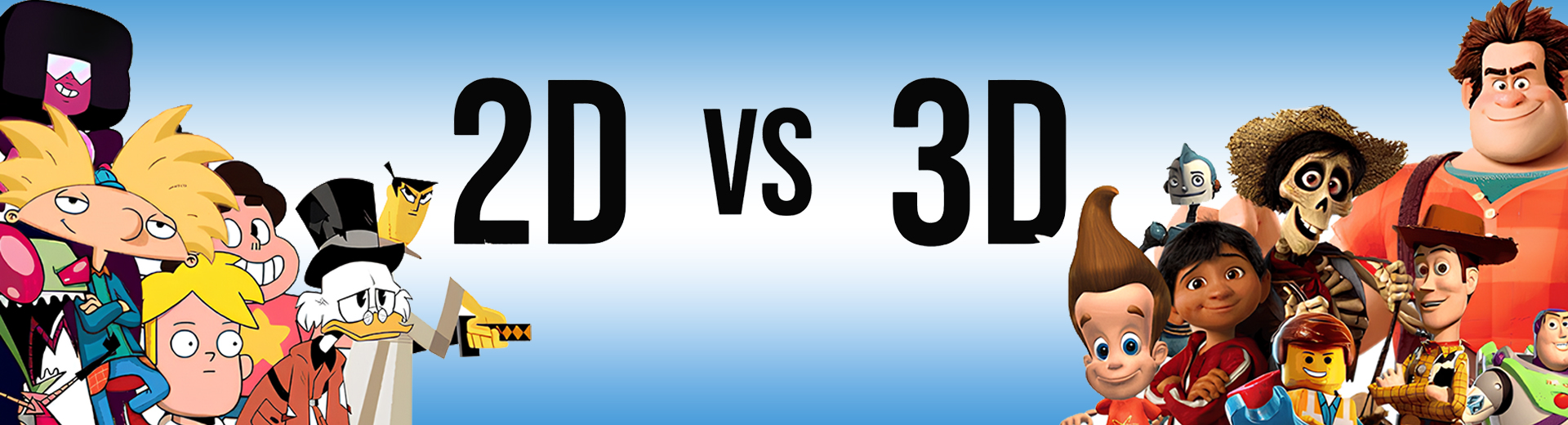
To figure out if 3D art is worth it, you have to understand that 2D and 3D use different parts of your brain.
- In 2D Art, you are the physics engine. Every time you draw a character, your brain has to calculate lighting, perspective, and materials. If you lose focus, the drawing looks wrong.
- In 3D Art, the computer handles the physics. You place a light, and the software calculates the shadows. But this convenience comes with a heavy price tag: The Pipeline Tax.
The Time-to-Asset Trap
While a 3D artist doesn't need to manually draw every shadow, the time investment to get a game-ready asset is punishingly high compared to 2D.
Feature | 2D Art / Concept | 3D Art / Production Asset |
Speed | 1-3 Days. You iterate fast. | 7-15 Days. It's a slow, linear process. |
Changes | Easy. Just paint over it. | Hard. You might have to rebuild the whole model. |
Cognitive Load | Visual. "Does this look cool?" | Technical. "Why is my bake exploding?" |
A 2D artist can fix a lighting mistake in 5 minutes. A 3D artist might spend 5 hours troubleshooting a normal map issue. This "technical friction" is the #1 reason for 3D art burnout.
The 3D Art Pipeline: A Career-Ending Nightmare
Why do beginners call it a nightmare? Because the days of just "sculpting cool monsters" are gone. To get hired in 2026, you basically need to be half-artist, half-IT technical support.
The Software Bloat
You aren’t an artist; you’re a software juggler. You’re expected to master a fragmented tech stack—ZBrush for the sculpt, Maya for the base, Substance for the maps, and UE5 just to see if it even runs.
The "Soul Killers": Retopo and UVs
The art doesn’t break students; the technical grunt work does.
- Retopology: Manually tracing your high-poly sculpt into a mesh that doesn't explode during animation.
- UV Unwrapping: The digital equivalent of skinning a teddy bear and trying to lay it flat without any wrinkles.
It’s 80% troubleshooting, 20% creativity. Welcome to the grind. If you mess up step 1, the whole thing fails at step 4. It's unforgiving. Unlike 2D, you can't just fudge it.
It's Not Just Games: The Series of 3D Jobs
Here is where many beginners get lost. They think "3D Art" only means making characters for Fortnite. But in 2026, the industry has splintered into different "Types of 3D Art," and understanding this can save your career.
1. Architectural Visualization (The "3D Wall" Path)
You've probably seen trends like "3D Wall" panels or textured wallpapers on Pinterest. While consumers are just buying decor, professionals are working in ArchViz.
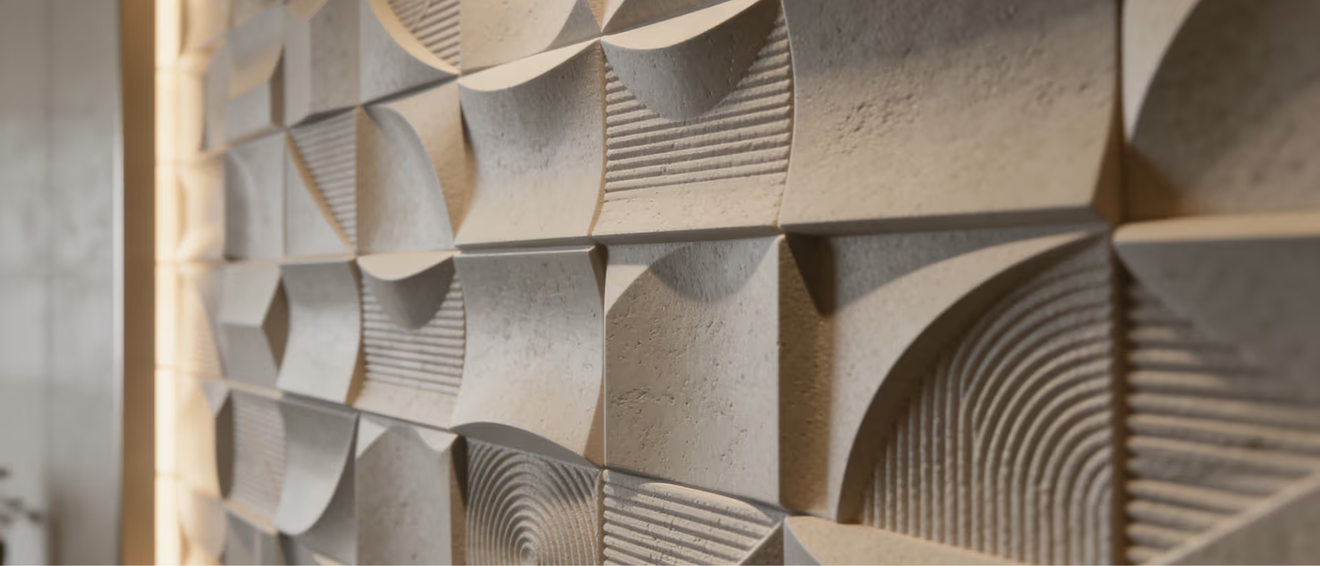
- The Job: Making photorealistic houses and interiors before they are built.
- The Vibe: It's stable. You aren't crunching for a game release; you're helping architects sell luxury condos.
2. Physical Fabrication (The "3D Pen" to Pro Pipeline)
A lot of people start with a 3D Pen or a cheap printer, just making plastic doodles. But this path leads to Additive Manufacturing.

- The Job: Sculpting high-detail statues for collectibles (think Anime figures) or medical prosthetics.
- The Vibe: Your ZBrush skills pay off here. You don't care about game engines; you care about physics. It's about making things that exist in the real world.
3. Real-Time Interactive (The Tech Path)
This is the high-stress, high-reward path. Games, VR, VFX, Metaverse.
- The Job: Environment Art, Tech Art, Character Art.
- The Vibe: This is where the innovation happens, but also where the layoffs happen.
The AI Factor: Enemy or Exclusive Intern?
By 2026, (like Meshy or Triverse) will solve the boring problems. AI can now make generic rocks, crates, and background textures instantly.
If your portfolio is full of generic props, you are in trouble. But for smart artists, AI is the best thing that has ever happened.
The Benefits of AI-Powered 3D Generation Tools
Instead of fighting the wave, successful Hybrid Artists are surfing it. Here is how leveraging an AI 3D generation tool like Triverse AI actually fixes the nightmare:
- Skip the "Ugly Phase": The hardest part is the blank canvas. Use AI to generate a rough 3D base from a prompt.
- Old Way: Spend 4 hours blocking out a sci-fi crate.
- New Way: Prompt it or drop a picture, get a GLB file, and then spend your energy making it look cool in Blender.
- Instant AI Textures: Making seamless textures is tedious. AI generates PBR Maps (roughness, normal, color) in seconds. Stop wasting time on dirt layers and focus on the storytelling.
- Automatic Retopology: While not perfect for main characters, AI-driven auto-retopology is now good enough for static props. This eliminates the most soul-crushing part of the pipeline—manually drawing polygons over a barrel.
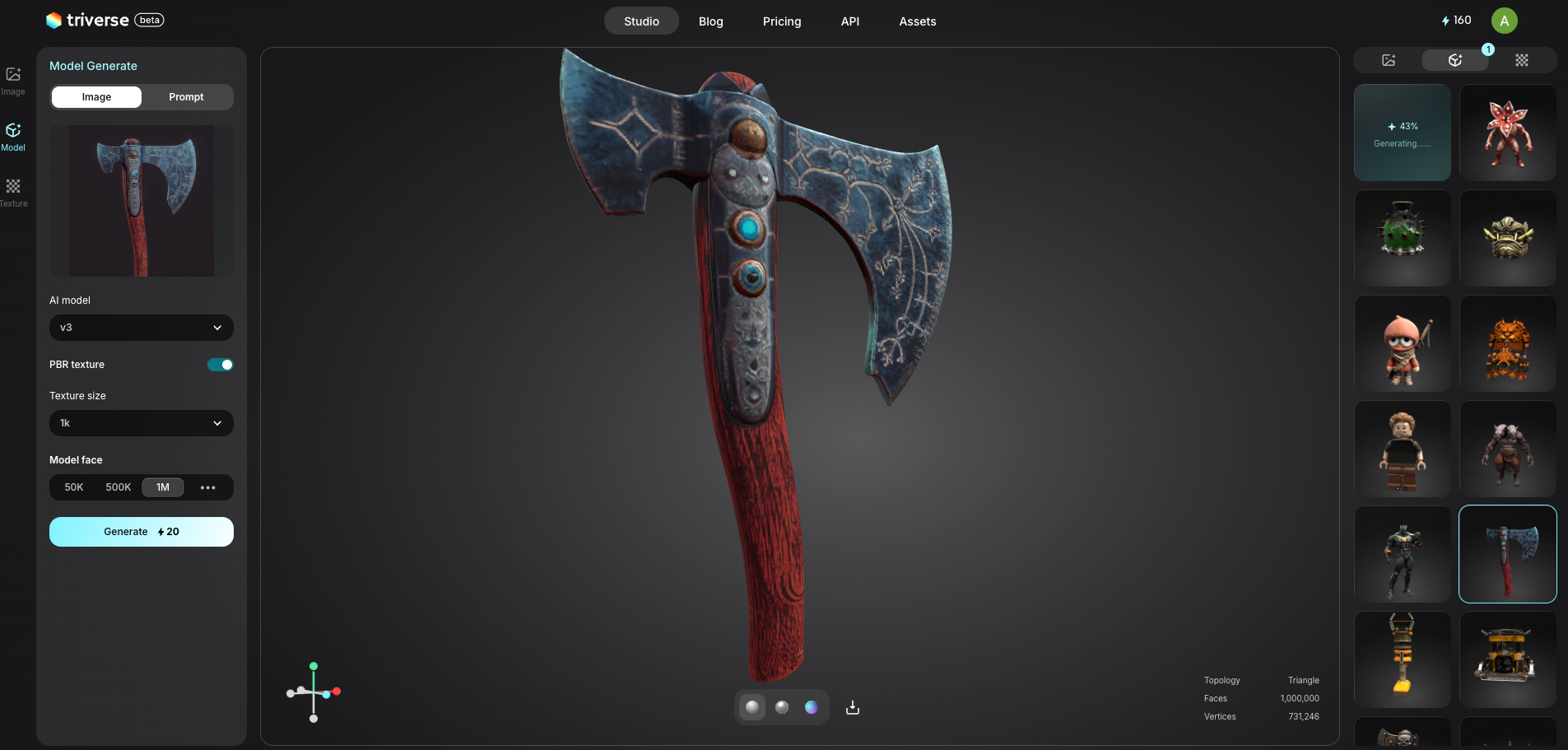
Pro Tip: Specificity is your shield. AI is terrible at highly specific mechanical designs or characters with unique personalities. Let AI handle the background; use your hands for the Hero assets.
Market Reality: Where is the Money?
Despite the difficulty, why is the market growing to $36 billion? Because 3D art is leaving the entertainment bubble.
While the gaming industry faces consolidation, demand is exploding in sectors that require functional accuracy rather than just aesthetic beauty.
- 3D E-Commerce ($10.5B Market): Retailers need "Virtual Try-On" and 3D product configurators. A 3D model of a sneaker isn't just art; it's a sales tool.
- Spatial Computing (XR): With the maturity of Apple Vision Pro and Quest ecosystems, "flat" assets are useless. The interface of the future is volumetric.
Salary Reality:
- Median 3D Salary: ~$74,000 (US Average).
- Top 2D Concept Artists: ~$127,000+.
The Catch: The "ceiling" for 2D is higher, but it's a "winner-take-all" market. It is incredibly hard to become a top concept artist.
The Good News: The "floor" for 3D is higher. There are thousands of mid-level jobs in advertising, e-commerce, and industrial viz that pay decent money.
3D Art Learning Paths and Resources
Don't try to learn everything at once. You will burn out. Here is the roadmap:
Stage 1: The Generalist Foundation (Months 1-3)
- Goal: Understand the loop (Model -> UV -> Texture -> Render).
- Software: Blender (It is the industry standard for Indies now).
- Focus: Hard Surface Modeling. Do not start with characters; start with a chair. Understand why "Quads" matter.
Stage 2: The Specialist Divergence (Months 4-9)
At this stage, pick a lane. Generalists get overworked; Specialists get paid.
Path | Key Software | Focus Skills |
Environment Art | Unreal Engine 5, Substance Designer | Modular kits, Trim sheets, Lighting, Composition. |
Character Art | ZBrush, Marvelous Designer | Anatomy, Retopology, Hair cards, Cloth sim. |
Hard Surface / Tech | Moi3D, Fusion 360 | CAD-based modeling, Boolean workflows, complex mechanical joints. |
Stage 3: The "Employable" Layer
- Game Engines: You must know how to import your model into Unity 6 or Unreal Engine 5. A model that only looks good in a Blender render is useless to a studio.
- Optimization: Learn about Draw Calls and LODs (Level of Detail).
- Tech Art: A basic understanding of Python or Blueprints increases your hireability by 50%.
The Verdict
So, is 3D art still worth it?
NO—if you want to just "make pretty pictures", stick to 2D or use an AI prompting tool like Triverse AI.
YES—if you want to build magic worlds with many assets.
The barrier to entry has shifted. It is no longer about "can you model a hand?" It is about "can you build a character that works in a game engine, reacts to light, and feels real?"
3D art in 2026 is less about manual labor and more about system mastery. If you can survive the technical learning curve, you gain a superpower that 2D artists don't have: Spatial Dominion. You don't just draw the world; you build the place where the drawing lives.
The "nightmare" is real, but so is the opportunity. Don't let Reddit scare you off—just make sure you're learning the skills that actually pay.
Frequently Asked Questions about 3D Artist
Q1: Is transitioning from 2D to 3D art worth it?
Yes, if you enjoy technical challenges. Your 2D background gives you a massive advantage in composition and texture painting (Hand-painting textures in 3D).
Q2: Which software should I learn first in 2026?
Blender. It has become the industry standard for Indies and is heavily used in AAA pipelines alongside Maya. Pair it with Unreal Engine 5 to understand real-time implementation.
Q3: Will AI replace 3D Modelers completely?
No. It replaces modeling from scratch. It does not replace optimization, rigging, UV layout for complex meshes, or environmental storytelling. The job is shifting from "vertex pusher" to "asset curator". To survive in 2026, you shouldn't compete with AI on speed; you should focus on "Hero Assets"—complex characters, specific mechanical designs, and environmental storytelling that AI cannot replicate with intention.
Q4: Is 3D art expensive to start? Do I need a powerful PC?
Yes, the barrier to entry for 3D art is higher than 2D. Unlike drawing, where you only need an iPad, 3D rendering requires a PC with a dedicated GPU (NVIDIA RTX series recommended). While you can learn modeling on a budget laptop, doing high-end texturing in Substance Painter or real-time rendering in Unreal Engine 5 requires hardware that can handle the heavy computation.
Q5: Should I learn Blender or Maya to get a job in the game industry?
For development and freelancing, Blender is the undisputed king in 2026 because it's free and powerful. However, if your goal is to work at a major AAA studio (like Naughty Dog or Ubisoft), Maya remains the industry standard for animation and rigging pipelines. The best advice? Master Blender first to learn the concepts, then spend a month learning the Maya interface if a job requires it. Plus, you should learn more about AI 3D model generators.