Les émanations des imprimantes 3D sont-elles dangereuses ? Ce que vous inhalez réellement
Vous vous demandez si les émanations des imprimantes 3D sont dangereuses ? Ce guide traite des émissions de PLA, d'ABS et de résine, la sécurité salle par salle, et le système de ventilation qui est véritablement efficace.
Vous vous tenez près de votre imprimante qui imprime et elle dégage une odeur de plastique chaud, sucrée, presque comme celle des bonbons. Est-ce un problème ?
La plupart des gens qui impriment du PLA supposent que cela ne pose aucun problème. D'autres ne toucheront pas à l'ABS sans un équipement de protection complet. La réalité se trouve entre les deux. Tout dépend du matériau, de la température et du fait que votre pièce dispose d'une ventilation ou non.
Ce guide va droit au but. Nous classerons les matériaux par risque réel, vous expliquerons quels aménagements sont sûrs dans quelles pièces, et vous proposerons un plan de ventilation et de filtration que vous pourrez réaliser pour moins de 40 € ou adapter selon vos besoins. À la fin de ce guide, vous saurez exactement où vous en êtes et quoi corriger si vous n'êtes pas sûr.
Les fumées des imprimantes 3D sont-elles dangereuses ? Classement des risques des matériaux d'un seul coup d'œil
La réponse courte\u00a0: cela dépend de trois éléments. Le matériau utilisé, la température d’impression et la ventilation de votre espace de travail.
Mais vous voulez probablement plus que cela. Voici comment les matériaux d'impression 3D les plus courants se positionnent les uns par rapport aux autres.
Matériaux | Niveau de risque | Émanations de clé | Ventilation nécessaire |
|---|---|---|---|
Armée populaire de libération (APL) | Faible | Majoritairement des particules ultrafines, faibles émissions de COV | Ouvrir une fenêtre ou utiliser un purificateur d'air |
PETG | Modéré | PFU ainsi que certains COV | Bonne circulation ou extraction légère d'air |
ABS / ASA | Élevé | Styrène, COV élevés | Boîtier étanche plus ventilation active |
Résine | Très élevé | Acrylates, CVO réactifs | Ventilation dédiée associée à une filtration sur charbon actif |
Le PLA est le filament courant le plus sûr, mais cela ne signifie pas qu'il soit inoffensif. Un test récent de la qualité de l'air a mesuré les émissions de PLA dans un véritable atelier et a détecté des niveaux mesurables de particules ultra-fines et de COV, en particulier à des températures d'impression élevées. Avec un purificateur d'air ou une fenêtre ouverte, le PLA est considéré comme présentant un faible risque pour la plupart des gens. Mais « faible risque » et « totalement sûr » ne sont pas la même chose.
L'ABS libère du styrène, que le Centre international de Recherche sur le Cancer classe comme cancérogène probable pour l'homme (groupe 2A). On peut généralement le sentir lorsque les émissions sont élevées, ce qui fait dire à certains qu'il est « plus sûr » que le PLA d'une manière étrange. Vous recevez un avertissement. Mais au moment où vous le sentez, l'exposition est déjà en cours.
La résine appartient à une catégorie totalement différente. Les photopolymères utilisés dans l'impression SLA et LCD réagissent dès qu'ils sont exposés à la lumière UV, et pas seulement lorsqu'ils sont chauffés. Les fumées sont plus fortes, demeurent plus longtemps et les composés sont plus irritants. Utiliser une imprimante à résine sans ventilation dédiée n'est pas un compromis acceptable au niveau amateur.
Que respirez-vous exactement ?
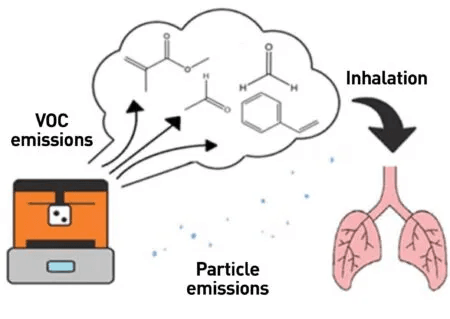
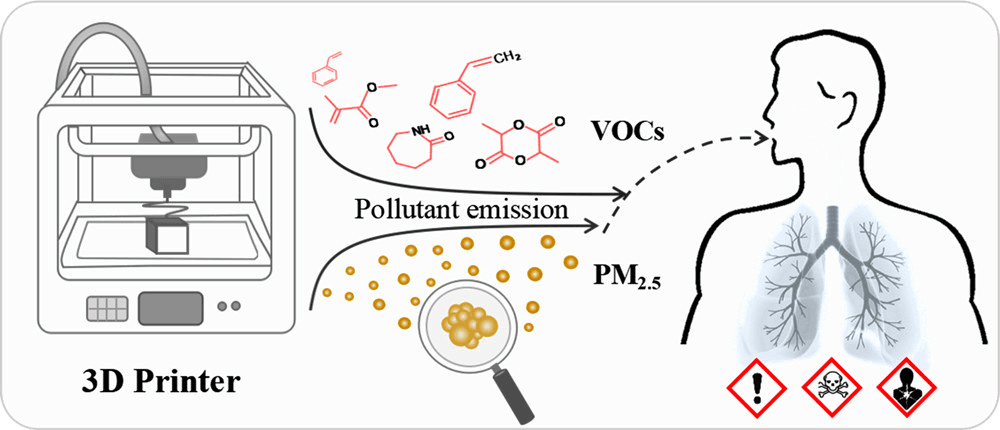
Les imprimantes 3D émettent deux principaux types de contaminants en suspension dans l'air qui comptent pour votre santé.
Particules ultrafines
Ces particules sont inférieures à 0,1 micromètre. Pour donner un ordre d'idée : un globule rouge humain mesure environ 7 micromètres. Ces particules sont si petites que les poumons ne peuvent pas les filtrer efficacement, et des recherches suggèrent que certaines peuvent passer dans le sang.
Elles se forment lorsque le filament fond à haute température ou lorsque la résine liquide durcit sous les rayons UV. Les imprimantes FDM les génèrent lors de l'extrusion. Les imprimantes à résine les génèrent pendant la réaction de durcissement. La recherche du NIOSH sur les émissions liées à l'impression 3D identifie les particules ultrafines comme la principale préoccupation en matière d'inhalation pour ces deux technologies, surtout en cas d'exposition répétée.
Le véritable problème n'est pas une seule session d'impression. C'est l'effet cumulatif de l'impression régulière dans un espace mal ventilé sur plusieurs mois ou années. Les recherches peinent encore à combler le manque de données à long terme, ce qui explique que vous voyez des divergences d'opinions en ligne.
Composé organique volatil
Les COV sont des gaz libérés lorsque les plastiques dépassent leur température de transition vitreuse. Différents matériaux libèrent différents composés à des taux différents.
L'ABS et l'ASA libèrent du styrène, le composé le plus préoccupant. Le formaldéhyde et d'autres aldéhydes sont également émis, en particulier à des températures de buse plus élevées. Le PETG émet des niveaux modérés de divers composés. Le PLA émet le moins de composés dans l'ensemble, principalement une substance appelée lactide, qui est considérée comme de faible toxicité mais non inerte.
L'impression à la résine est différente également. La réaction de durcissement libère des acrylates et des méthacrylates, qui sont des composés réactifs pouvant irriter la peau, les yeux et les tissus respiratoires. Contrairement à l'impression par filament, où les émissions se produisent principalement pendant l'impression active, les imprimantes à résine peuvent continuer à dégager des gaz à partir des résidus non durcis sur le plateau d'impression et dans la cuve après l'impression.
Pourquoi la température compte
Une règle pratique à connaître : une buse fonctionnant à 10 °C de plus que nécessaire génère nettement plus de fumées sans améliorer la qualité d'impression. Chaque matériau possède sa propre plage de température de fonctionnement. En restant dans la partie inférieure de cette plage, tant que l'impression est réussie, vous réduisez mesurablement votre empreinte en émissions.
Le PETG à 230 degrés Celsius comparé à 260 degrés Celsius produit un profil de COV différent. Si vous poussez les températures plus haut que nécessaire pour une meilleure adhérence des couches, vous émettez également plus de produits chimiques dans votre environnement. Il est judicieux de vérifier les paramètres de température de votre slicer par rapport aux recommandations du fabricant de filament.
Émissions FDM et résine : différences entre leurs profils d'émission
Les imprimantes FDM et à résine fonctionnent différemment, et cette différence est importante pour la planification de la sécurité.
Émanations du procédé de dépôt fondu (FDM)
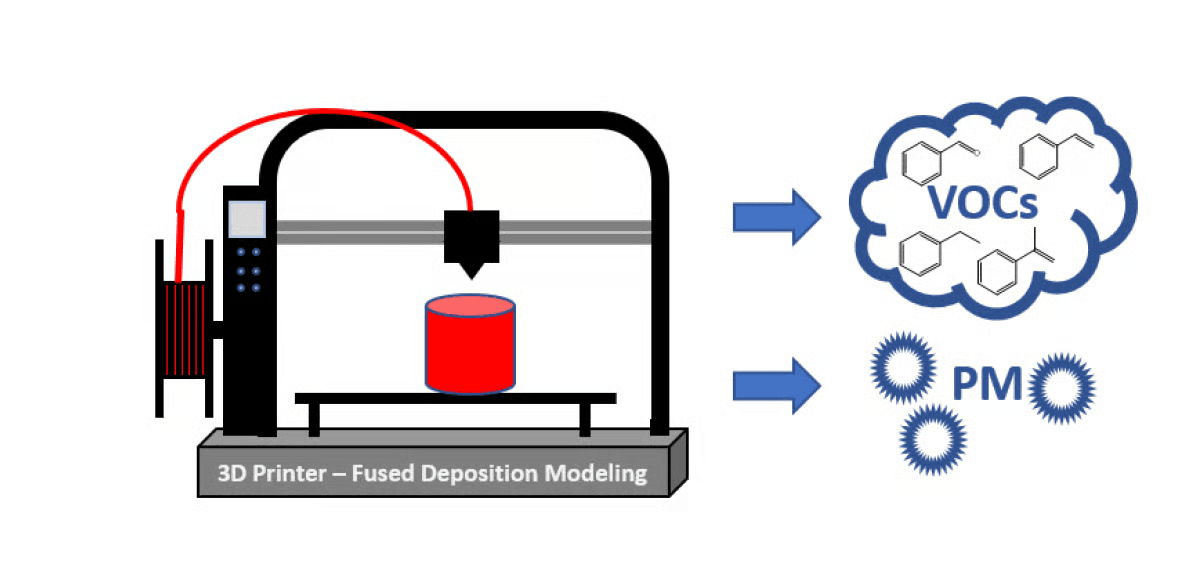
Les imprimantes FDM font fondre un filament solide via une buse chauffante et le déposent couche par couche. Les principales émissions sont des particules ultrafines et des niveaux modérés de composés organiques volatils (COV). Le volume d'émissions varie selon le type de filament. Le PLA produit relativement peu d'émissions. Le PETG présente des émissions intermédiaires. L'ABS génère nettement plus de COV, en particulier du styrène.
Les émissions se produisent pendant la phase active d'impression. Une fois l'impression terminée et la tête d'extrusion refroidie, la plupart des émissions directes cessent. Il peut y avoir des émissions résiduelles lors du refroidissement de la pièce, mais elles sont négligeables par rapport à ce qui se produit pendant l'impression.
Les émissions de résine : un problème distinct
Les imprimantes à résine fonctionnent en durcissant un photopolymère liquide avec de la lumière UV. La réaction chimique qui solidifie la résine est elle-même une source d'émanations. Contrairement à l'impression FDM, où la chaleur est le facteur déterminant, l'impression par résine implique une réaction photochimique qui libère des espèces réactives tout au long du processus de durcissement.
Les niveaux de COV sont nettement plus élevés que dans le procédé FDM. Les composés sont plus réactifs. Et contrairement à l’impression par filament, l’imprimante peut continuer à émettre des émanations provenant des résidus de résine non durcie sur le plateau d’impression et dans la cuve, même après la fin de l’impression. L’odeur a tendance à être plus forte et persiste beaucoup plus longtemps.
Principales différences pratiques
L'impression FDM avec du PLA et du PETG est gérable dans la plupart des foyers avec une ventilation de base. Ouvrez une fenêtre, utilisez un ventilateur d'appoint ou purifiez l'air de la pièce, et vous resterez dans une marge de risque raisonnable pour la plupart des gens.
L'impression en résine nécessite un engagement plus soutenu. Une ventilation dédiée, une filtration sur charbon actif et parfois un espace de travail physiquement séparé ne sont pas superflus. Ils constituent la base pour une pratique régulière de l'impression en résine.
Si vous hésitez entre les deux et que la ventilation pose contrainte, la FDM est le choix évident pour la plupart des débutants. Si vous avez besoin de la qualité d'impression offerte par la résine et que vous partez de zéro, prévoyez la ventilation avant de brancher l'imprimante.
Est-il sécuritaire d'imprimer dans mon espace de sommeil ? Un guide espace par espace
Voici l'analyse détaillée que la plupart des articles dissimulent dans une liste à puces. Chaque type de pièce bénéficie d'une réponse concrète.
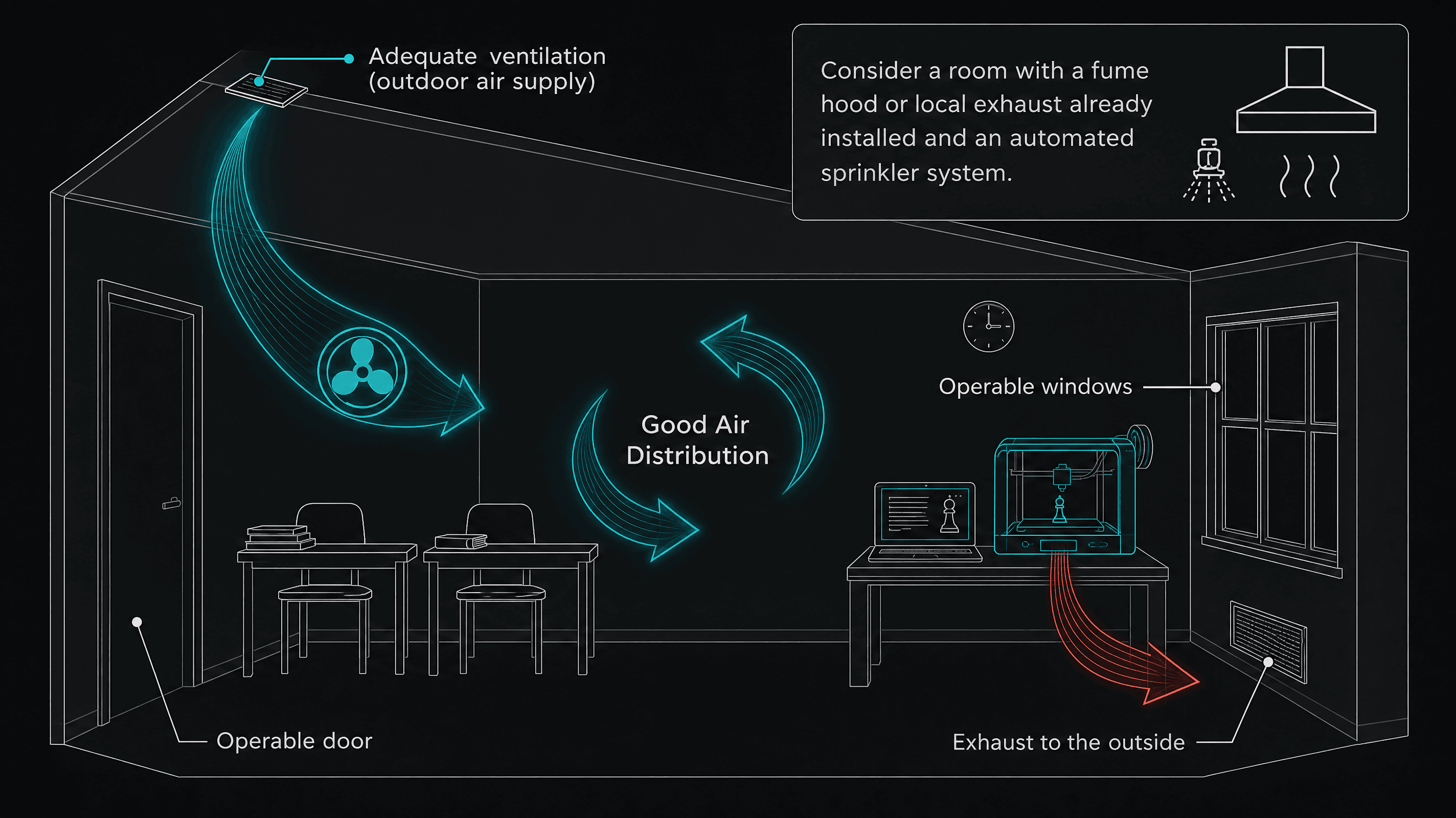
Chambre
Déconseillé pour tout autre matériau que du PLA avec une fenêtre ouverte. Les chambres à coucher ont un faible taux de renouvellement d'air et vous passez de 6 à 8 heures à respirer passivement l'air pendant que vous dormez. Si vous devez faire de l'impression 3D dans une chambre, limitez-vous au PLA, ouvrez une fenêtre et n'imprimez jamais d'ABS ou de résine ici.
Le risque lié à une seule impression PLA dans une pièce ventilée est faible. Le risque de faire fonctionner une imprimante chaque nuit dans une pièce fermée relève du problème d'exposition cumulée, que personne n'a encore entièrement caractérisé. Ce n'est pas une raison pour paniquer. C'est une raison de déplacer l'imprimante si vous le pouvez.
Salon
Acceptable pour le PLA et le PETG avec une ventilation croisée. Maintenez l'imprimante à au moins 2 mètres des espaces de séjour. L'ABS et la résine ne conviennent à aucun espace de vie partagé sans caisson fermé et système d'évacuation active. Si l'imprimante est située près d'un endroit où quelqu'un reste assis pendant des heures, l'exposition cumulée aux particules et aux COV augmente.
Home Office
Peut être utilisé avec un boîtier de confinement approprié et un purificateur d'air fonctionnant pendant et 30 minutes après chaque impression. Placez l'imprimante près d'une fenêtre pour une évacuation passive. Évitez l'ABS dans un bureau à domicile sans système d'extraction actif vers l'extérieur. Les recommandations de sécurité du Département de la santé de l'État de Washington concernant les imprimantes 3D recommandent un système d'extraction mécanique local pour tout espace où des personnes travaillent à proximité d'imprimantes pendant de longues périodes.
Garage ou atelier
La meilleure configuration à long terme pour tout matériau. Des plafonds plus élevés permettent une meilleure dilution naturelle des fumées. La séparation physique de zones de vie et de sommeil en fait le choix le plus sûr pour l'impression avec ABS, ASA et résine. Si vous êtes sérieux dans le domaine de l'impression 3D, un garage ou un espace dédié est l'investissement qui rapporte le plus directement en matière de sécurité.
Comment Ventiler et Filtrer Correctement Votre Imprimante 3D
Trois couches fonctionnent ensemble. Si vous en sautez une, vous créez un vide.
L'architecture de sécurité à trois niveaux
Le confinement à la source capture les fumées au niveau de la buse grâce à un capotage. Un système d'extraction active les évacue de la pièce à l'aide d'un ventilateur et de conduits. La filtration retient les résidus non captés par la ventilation, en utilisant des filtres HEPA pour les particules et du charbon actif pour les COV.
Un filtre HEPA seul ne capture pas les COV. Un boîtier sans évacuation se contente de concentrer les fumées jusqu'à l'ouverture de la porte. Des filtres au charbon actif seuls ne capturent pas les particules ultrafines. La configuration en cascade est cruciale.
Option 1: Ventilateur d'extraction pour fenêtre
L'approche offrant le meilleur rapport qualité-prix. Un ventilateur en ligne de 4 pouces d'une capacité de 100 CFM ou plus, relié à un conduit flexible en aluminium acheminé vers une fenêtre. Coût total inférieur à 40 $. Fixez le conduit à un kit d'extraction pour fenêtre ou scellez-le simplement avec du panneau de mousse.
Ce système gère efficacement les émanations de PLA et de PETG dans la plupart des environnements. Pour l'ABS, ajoutez un caisson pour contenir les émanations à la source avant leur aspiration par le ventilateur.
Option 2: Capotage Plus échappement actif
La configuration recommandée pour toute personne qui imprime régulièrement de l'ABS ou de la résine. Une enceinte fermée avec un orifice d'évacuation, un ventilateur en ligne et un conduit menant à un évent extérieur ou à une fenêtre. Certaines imprimantes sont équipées d'origine de ce système. La P1S de Bambu Lab et les imprimantes fermées similaires disposent d'orifices d'évacuation conçus à cet effet.
Ajoutez un filtre à charbon actif à la sortie d'évacuation pour capturer les COV avant qu'ils ne quittent le boîtier. Sans charbon, vous évacuez les vapeurs à l'extérieur, ce qui est acceptable si votre fenêtre donne sur l'air libre. Si la sortie d'évacuation débouche près d'une fenêtre susceptible de réintroduire l'air, la filtration au charbon à la sortie d'évacuation s'avère nécessaire.
Option 3 : Purificateur d'air en tant que complément
Un purificateur d'air ambiant équipé d'un filtre HEPA véritable et d'au moins 2 à 3 livres de charbon actif réduit les particules en suspension et les composés organiques volatils (COV). Utilisez-le en complément de la ventilation, pas en remplacement. La plupart des purificateurs d'air grand public contiennent bien trop peu de charbon actif pour gérer une impression continue en ABS ou en résine.
Leur point fort est de nettoyer l'air de la pièce pendant et après l'impression, réduisant ainsi la concentration ambiante qui s'accumule lors d'une longue session.
Option 4 : Extracteur de vapeurs professionnel
Les extracteurs de fumées de qualité pour soudure et découpe laser conviennent bien pour l'impression 3D. Ils sont conçus pour fonctionner en continu, positionnés près de la source, et conçus pour le type de cycle de fonctionnement que les impressions de longue durée exigent. Un coût initial plus élevé, mais la solution la plus efficace à long terme si vous imprimez régulièrement de la résine ou de l'ABS.
Combien de temps ventiler après l'impression 3D
Maintenez la ventilation en marche pendant 30 à 60 minutes après la fin d'une impression. Le processus de refroidissement du hotend libère des particules et des gaz résiduels. Pour les imprimantes à résine, le plateau d'impression et la cuve peuvent continuer à émettre des vapeurs pendant plusieurs heures après la fin d'une impression. Ne jamais simplement ouvrir l'enceinte d'impression et quitter la pièce sans précaution immédiatement après une impression à résine.
Réduire les échecs d'impression équivaut à réduire l'exposition aux vapeurs
Chaque impression ratée signifie tout recommencer. Cela double la durée d'utilisation de l'imprimante pour cette session et double votre exposition aux émanations. La mesure de sécurité la plus négligée dans l'impression 3D est d'obtenir une impression réussie dès la première tentative.
L'utilisation d'un flux de travail de création de modèles qui produit une géométrie étanche et prête à l'impression réduit considérablement les taux d'échec. Les modèles avec des parois fines, des arêtes non manifoldes ou des normales inversées échouent plus souvent lors du tranchage. Chaque réimpression entraîne un temps d'impression supplémentaire et une exposition supplémentaire.
Pour les développeurs de jeux, les amateurs d'impression 3D ou les studios sans équipe artistique dédiée, Triverse AI peut aider à générer des modèles prêts à imprimer qui arrivent dans votre slicer sans le nettoyage géométrique habituel ni les réimpressions. Vous décrivez ce dont vous avez besoin, le modèle se génère en quelques minutes, et il s'exporte en format STL ou 3MF propres qui se découpe sans erreur dès la première tentative. Moins de réimpressions signifie moins de temps d'utilisation de l'imprimante, moins de gaspillage de matériau et moins de temps à respirer les émissions de votre filament ou résine.
Comment générer des modèles 3D via Triverse AI
- OuvrirTriverse Studio et sélectionnez Génération de ModèlesChoisir Image pour télécharger une photo ou un croquis de référence, ou InvitationPour décrire votre élément.
- Cliquez Générer .
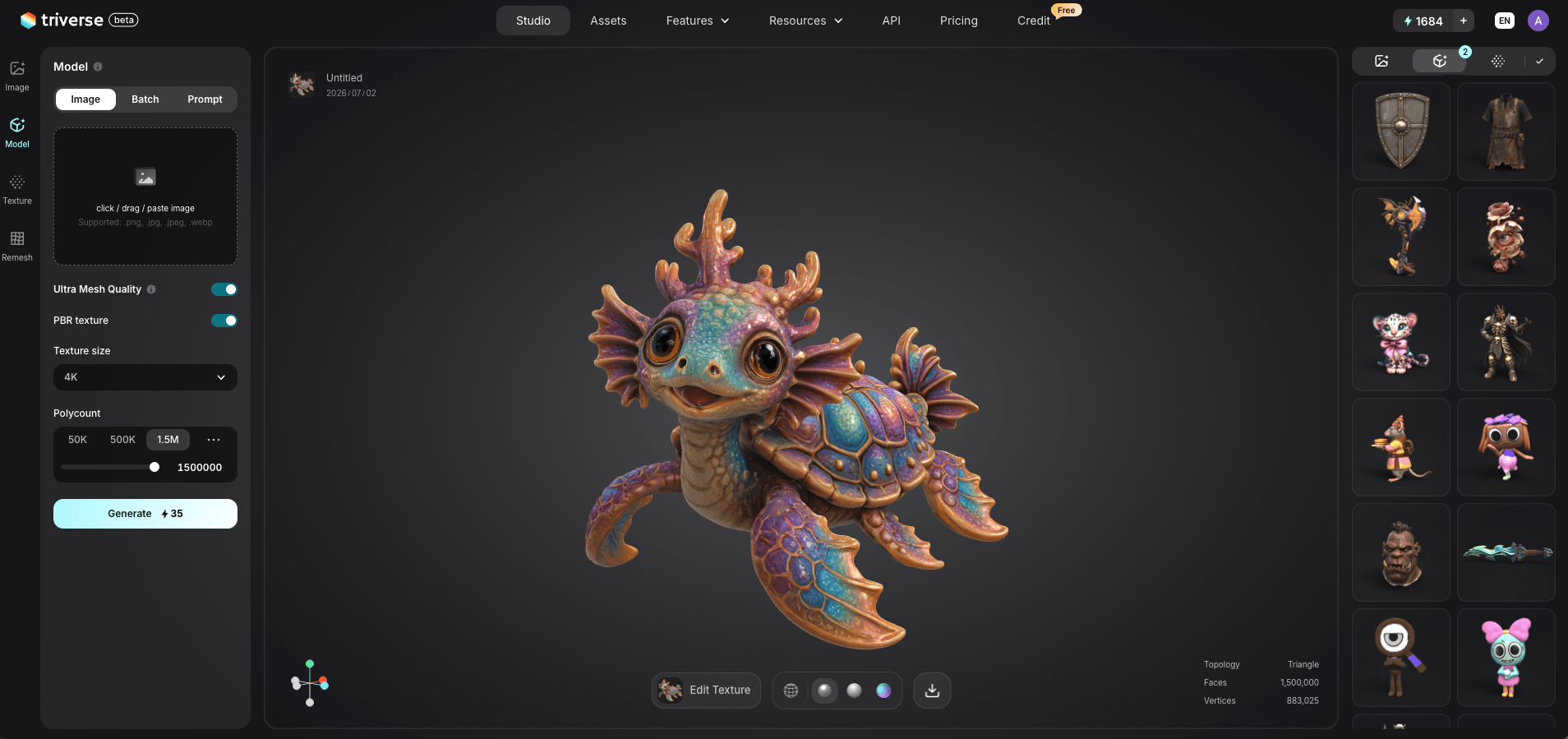
- Lorsque le modèle apparaît dans la visionneuse 3D, tournez-le et inspectez-le. Si les proportions semblent erronées, ajustez l'invite et régénérez-le.
- Lancer Remaillage pour optimiser la topologie et uniformiser la géométrie des parois avant l’exportation. Cela réduit le risque que des murs fins ou des erreurs de maillage apparaissent dans votre logiciel de tranchage.
- Cliquez sur le Télécharger l'icône et sélectionner STL pour l'impression FDM, ou 3MF (3D Manufacturing Format) afin de préserver les données de couleur et de matériau. Pour la résine, réglez le polycount sur 1 million ou plus avant l'export.
- Ouvrez le fichier STL dans votre logiciel de tranchage, prévisualisez les parois et lancez le tranchage. La plupart des fichiers exportés depuis Triverse peuvent être tranchés sans erreur dès la première tentative.
Check-list de sécurité avant impression
Avant chaque séance, parcourez cette liste.
Vérification | Action | Priorité |
|---|---|---|
Ventilation en fonction ? | Ventilateur allumé, fenêtre ouverte, ou hotte activée | Critique |
Emplacement de l'imprimante ? | À au moins 2 mètres des pièces à vivre et chambres | Élevé |
Boîtier scellé (ABS ou résine) ? | Confirmez que le port d'échappement est connecté | Élevé |
Gants et isopropanol prêts (pour la résine) ? | Gants en nitrile pour le nettoyage post-impression | Élevé |
Le kit anti-pollution est-il accessible ? | Serviettes en papier, alcool isopropylique à portée de main | Moyen |
Minuterie post-impression configurée ? | 30 à 60 minutes d'aération après l'impression | Élevé |
Faut-il effectuer l'entretien courant du filtre ? | Vérifier les programmations des filtres HEPA et à charbon | Medium |
Débit d'air de la pièce? | La ventilation générale de la pièce est en marche | Moyen |
Si vous sentez de fortes odeurs chimiques pendant une impression, arrêtez l'impression et améliorez la ventilation avant de continuer. N'attendez pas la fin de l'impression. Les vapeurs que vous détectez dépassent déjà un seuil raisonnable.
Autres questions fréquentes sur la sécurité des émanations d'impression 3D
En résumé
L'impression 3D est sans danger pour une utilisation domestique lorsque votre installation est adaptée au matériau utilisé. Le PLA et le PETG dans une pièce avec une fenêtre ouverte ou un purificateur d'air en fonctionnement suffisent pour la grande majorité des amateurs. L'ABS et les résines nécessitent une enceinte fermée ainsi qu'un système d'évacuation active, c'est tout.
Le risque ne réside pas dans une seule impression, mais dans l'exposition cumulative au sein d'un espace où le renouvellement de l'air est insuffisant. Trois points essentiels à retenir : adaptez votre matériau à votre système de ventilation, confinez l'imprimante et extrayez les émanations pour tout matériau autre que le PLA, et laissez tourner la ventilation pendant 30 à 60 minutes après la fin de l'impression.
Si vous sentez de fortes odeurs chimiques pendant une impression, interrompez l'impression et améliorez la ventilation avant de continuer.
Si vous cherchez à réduire les impressions ratées et l'exposition associée, Triverse AI génère des modèles STL prêts à imprimer qui se découpent parfaitement dès la première fois. Moins de gaspillage, moins de réimpressions, une exposition cumulative réduite.