Édition 2026 : Le guide complet de l'impression 3D en résine, des débutants aux experts
Guide de débutant pour l'impression 3D en résine couvrant les imprimantes SLA, DLP et MSLA, la sécurité des résines, les supports, le durcissement, le tranchage (slicing) et les workflows pour créer des miniatures, prototypes, pièces de collection et modèles STL imprimables de haute qualité.
30 mai 2026
L'impression 3D en résine est devenue l'une des méthodes les plus populaires pour créer des modèles très détaillés à la maison. Par rapport à l'impression à filament traditionnelle, les imprimantes à résine peuvent produire des surfaces plus lisses, des détails plus nets et des finitions miniatures plus précises, difficiles à obtenir avec les machines FDM classiques.
D'ici 2026, l'impression en résine ne sera plus réservée aux professionnels. Des imprimantes de bureau abordables, des modèles 3D générés par IA et des méthodologies conviviales pour les débutants ont considérablement facilité la création d'impressions de haute qualité pour miniatures, prototypes, bijoux, objets de collection et composants techniques.
Ce guide présente tout ce que les débutants doivent savoir, de son fonctionnement, de la sécurité, du tranchage, des supports et des techniques avancées pour améliorer la qualité d'impression.
Qu'est-ce que l'impression 3D par résine ?s Qu'est-ce que l'impression 3D à résine ?
L'impression 3D par résine est un procédé de fabrication qui utilise une résine photopolymère liquide et une lumière UV pour créer des objets très détaillés couche par couche. Comparées à l'impression FDM traditionnelle à base de filament, les imprimantes à résine sont réputées pour des surfaces plus lisses et des détails plus nets, ainsi qu'une meilleure précision pour les petits modèles tels que les miniatures, figurines, bijoux, et prototypes.
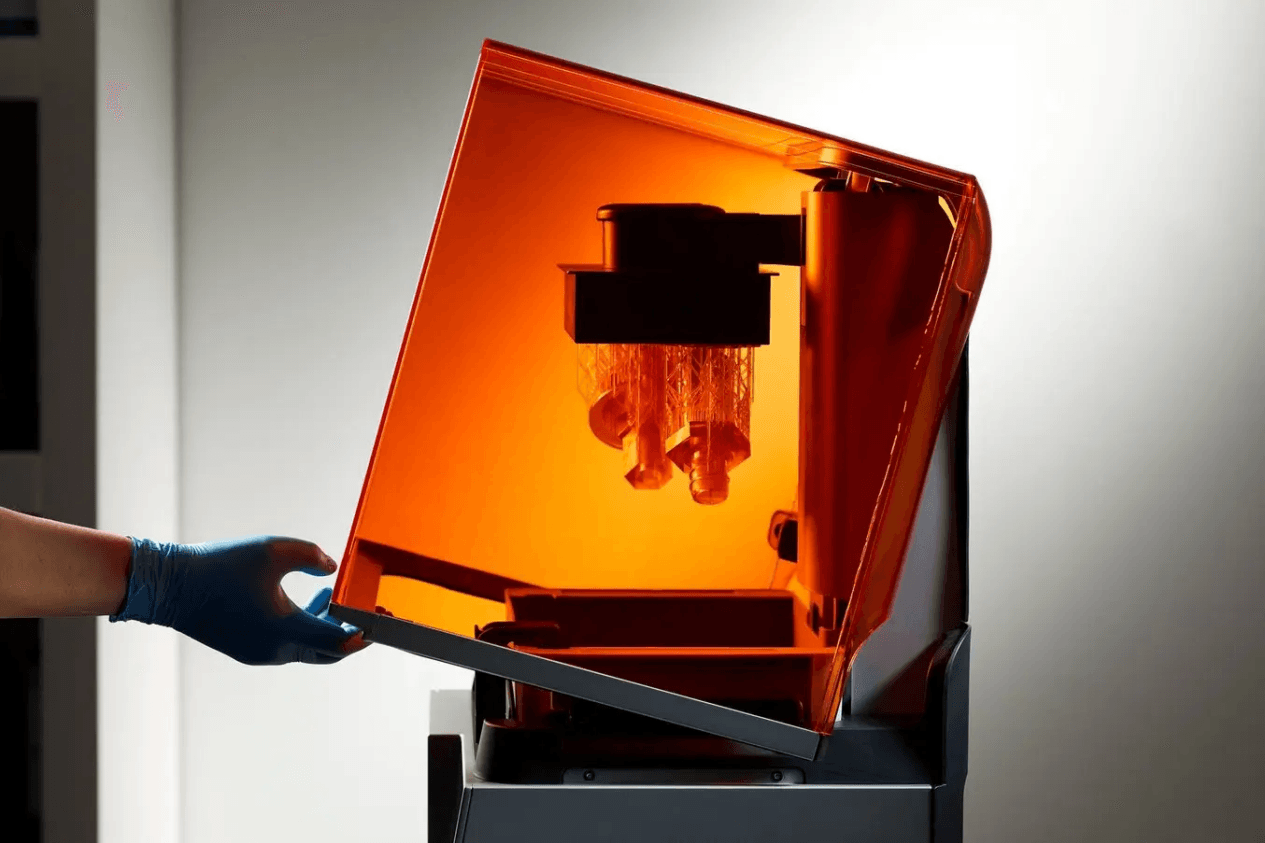
La plupart des imprimantes à résine actuelles sont soit des SLA, DLP ou MSLA/LCD.
Les imprimantes SLA utilisent des lasers pour durcir la résine point par point, et sont généralement très précises pour les processus professionnels tels que la fabrication de prothèses dentaires ou de bijoux. Les imprimantes DLP utilisent un projecteur numérique pour projeter chaque couche en une seule fois, ce qui accélère le durcissement pour certaines applications industrielles.
Aujourd'hui, pour la plupart des débutants, les imprimantes MSLA ou LCD sont la meilleure option. Ces machines utilisent un écran LCD rétroéclairé par UV pour polymériser des couches entières en une seule fois et offrent un excellent équilibre entre la qualité des détails, la rapidité et le prix. C'est cette technologie qui sous-tend la grande majorité des imprimantes à résine grand public en 2026.
Résine vs. FDM : laquelle est faite pour vous ?
Fonctionnalité | Impression en résine | Impression par dépôt de fil fondu (FDM) |
Qualité de surface | Surfaces extrêmement lisses | Lignes de stratification visibles |
Précision des détails | Parfait pour les fins détails | Idéal pour une géométrie simple |
Volume d'impression | Généralement plus petits | généralement de plus grande taille |
Flux de travail d'impression | Nécessite un nettoyage et une maturation | Flux de travail quotidien plus simple |
Manutention de matériaux | Précautions de sécurité requises | Plus facile à manier |
Idéal pour | Miniatures, articles de collection, maquettes détaillées | Pièces fonctionnelles, grandes impressions, prototypes |
Les imprimantes à résine sont excellentes pour produire des modèles très détaillés, y compris pour l'impression 3D de figurines, avec des finitions nettes. Mais l'impression FDM est généralement meilleure pour les grands objets pratiques, les pièces mécaniques et le prototypage courant. Elle a tendance à être plus facile à entretenir, plus sûre à utiliser, et nécessite moins de post-traitement puisqu'il n'y a pas de résine liquide à gérer.
Pour la plupart des débutants, le bon choix dépend de ce que vous souhaitez réaliser. L'impression en résine est généralement le meilleur choix si vous recherchez des détails fins et des modèles finis et esthétiques. Si vous privilégiez avant tout des pièces pratiques et durables, ainsi qu'un flux de travail plus simple, l'impression FDM peut être plus simple et économique pour commencer.
Que peut-on fabriquer avec une imprimante résine ?
Les imprimantes à résine sont populaires pour les figurines, les objets de collection, les prototypes de bijoux, les modèles dentaires et les pièces techniques. Elles sont particulièrement recherchées pour réaliser des surfaces lisses et des détails fins qui sont difficiles à obtenir avec l'impression FDM.
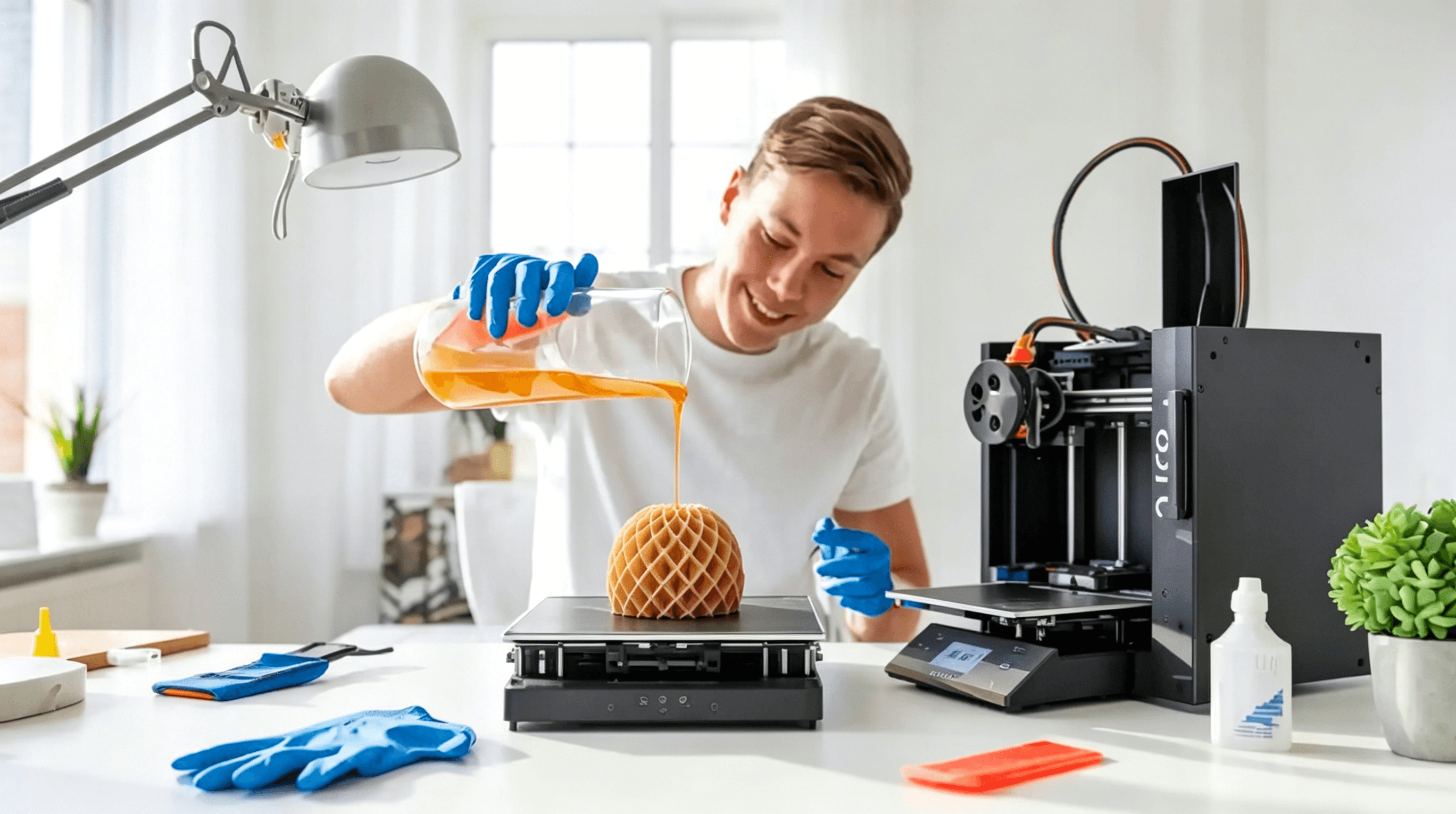
Grâce à cette précision, l'impression en résine est également la solution privilégiée pour les modèles visuels très détaillés et les prototypes de qualité professionnelle. Toutefois, une variété d'acheteurs comparent les imprimantes à résine et FDM afin de déterminer quelle technologie correspond le mieux à leurs projets, à leur budget et à leur flux de travail.
Ce qu'il vous faut pour débuter l'impression 3D sur résine
Se lancer dans l'impression par résine nécessite plus qu'une simple imprimante. Une installation sûre et efficace est extrêmement importante.
Imprimante à résine
Les imprimantes MSLA adaptées aux débutants constituent généralement le meilleur point de départ, car elles offrent une excellente qualité de détails sans complexité inutile. Les facteurs importants incluent la résolution de l'écran, le volume d'impression, la vitesse d'impression et la facilité de calibrage. Les écrans à plus haute résolution produisent généralement des détails des miniatures plus nets et des surfaces plus lisses.
Résine
Différents types de résine sont conçus pour différents flux de travail, notamment l'impression à usage général, les pièces d'ingénierie, les composants flexibles et la fonderie de bijoux. Le matériau que vous choisissez affecte la résistance mécanique de l'impression, la qualité des détails, la flexibilité et les exigences en matière de post-traitement.
Nettoyage et Polymerisation UV
Les tirages en résine fraîche doivent être lavés avant la polymérisation, car la résine non durcie reste sur la surface du modèle après l'impression. La plupart des utilisateurs lavent les impressions à l'aide d'alcool isopropanolique ou de solutions de nettoyage spécifiques, souvent en combinaison avec des stations de lavage et de polymérisation pour simplifier le flux de travail.
Après lavage, les impressions doivent être durcies sous lumière UV pour que la résine durcisse complètement et gagne en durabilité. Un durcissement adéquat contribue également à stabiliser la qualité de surface et la précision dimensionnelle.
Équipements de protection individuelle et sécurité lors de l'impression
La résine liquide ne doit jamais entrer en contact avec la peau nue, et les zones d'impression doivent rester bien ventilées. La plupart des utilisateurs portent des gants en nitrile et une protection des yeux pendant l'impression et le post-traitement, en particulier lors de la manipulation de résine non durcie ou d'alcool isopropylique.
Votre première impression en résine : un tutoriel pas à pas
Maintenant que vous pouvez générer un modèle prêt à imprimer à partir d'une image ou d'un prompt textuel avec Triverse AI, il est temps de lui donner vie grâce à l'impression 3D en résine. Les imprimantes à résine excellent dans le rendu des détails fins, les rendant idéales pour les miniatures, les objets de collection et les prototypes complexes.
Le Triverse AI produit des maillages propres et hermétiques optimisés pour l'impression, réduisant considérablement les problèmes courants tels que les erreurs de maillage.
1. Générer le modèle dans Triverse AI
Saisissez un prompt texte détaillé ou téléchargez une image. Si vous utilisez un prompt, veuillez inclure des mots-clés tels que « maillage hermétique, adapté à l'impression en résine, haute précision » pour obtenir les meilleurs résultats. Pour plus d'informations et d'aide, consultez le guide d'utilisation ici.
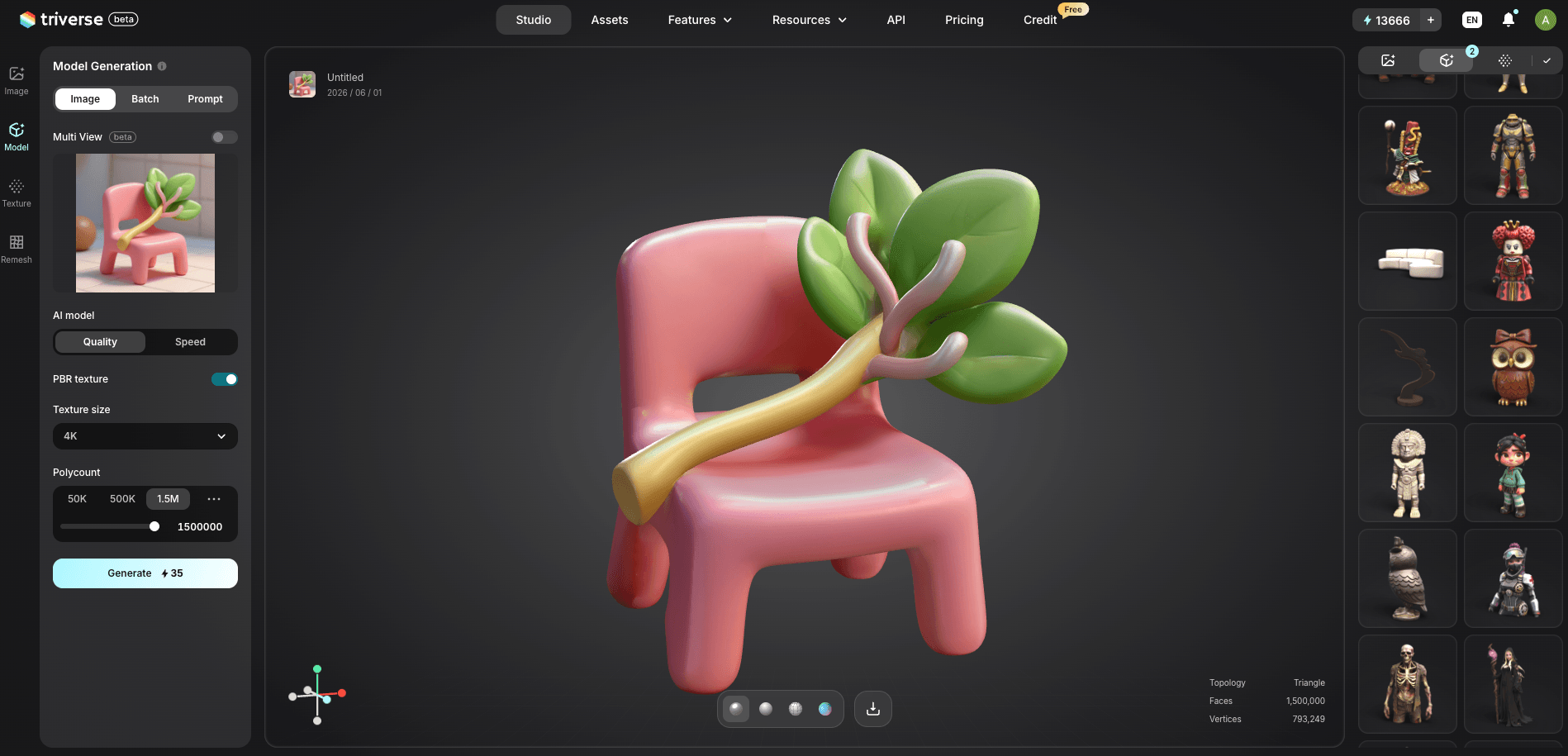
2. Exporter en format STL ou 3MF
Téléchargez le fichier directement depuis Triverse. Ces formats sont totalement compatibles avec tous les principaux trancheurs 3D.
3. Importer et inspecter dans Slicer
Ouvrez le modèle dans Lychee Slicer, Chitubox ou Voxeldance Tango. Vérifiez soigneusement qu'il n'y a pas de parois fines, d'îles ou de défauts de géométrie.
4. Définir l'orientation du modèle
Inclinez le modèle à 30°–45° pour minimiser l'effet de ventouse et les vastes surfaces planes sur le plateau d'impression. Cela améliore considérablement le taux de succès des impressions.
5. Ajouter des points d'appui
Ajoutez un mélange de supports denses, intermédiaires et légers. Accordez une attention particulière aux surplombs, aux pièces délicates et à la partie inférieure du modèle. Un placement approprié des supports est essentiel pour l'impression en résine.
6. Découper le Modèle
Définissez les paramètres appropriés : hauteur de couche (0,03–0,05 mm pour des détails fins), temps d'exposition, vitesse de levage et rétraction. Prévisualisez la tranche pour vous assurer que tout est correct.
7. Impression
Envoyez le fichier à votre imprimante à résine et démarrez l'impression.
8. Post-traitement
Décollez l'impression, lavez l'excès de résine (avec de l'IPA ou un solvant alternatif), puis durcissez sous lumière UV. Un ponçage léger ou une peinture supplémentaires permettront d'améliorer davantage le résultat final.
Avec Triverse AI, ce processus optimisé permet aux débutants de passer facilement d'une idée à un prototype physique en moins d'une heure de temps de travail effectif.
Astuces de pro pour des impressions en résine réussies avec la génération de modèles par Triverse
- Utilisez des invites détaillées dans Triverse pour obtenir des résultats plus précis dès le départ.
- Évidez le modèle (avec des trous d'évacuation) dans votre slicer pour économiser de la résine et réduire le poids.
- Pour les figurines, une hauteur de couche de 0,04 mm associée à de bons supports offre généralement une excellente qualité.
- Portez toujours un équipement de protection individuelle (EPI) approprié et assurez une ventilation adéquate lors de la manipulation de la résine.
Conseils avancés pour l'impression en résine pour de meilleurs résultats
Contrôle précis de la température
La résine se comporte très différemment selon la température ambiante. Dans des environnements plus froids, la résine devient plus visqueuse, ce qui peut entraîner une adhérence intercouche insuffisante, des supports qui échouent ou un durcissement incomplet.
La plupart des résines standard fonctionnent mieux entre 20°C et 30°C. Si votre atelier est trop froid, chauffer doucement le flacon de résine ou utiliser un chauffage d'enceinte peut considérablement améliorer la cohérence des tirages.
Réduction des forces d'aspiration
Les modèles creux de grande taille peuvent générer des forces d'aspiration importantes lors du soulèvement, en particulier lorsque les surfaces planes sont positionnées parallèlement au plateau d'impression. Évider les modèles, ajouter des trous d'évacuation, ajuster la vitesse de soulèvement et incliner légèrement la pièce peuvent toutes ces mesures contribuer à réduire les contraintes pendant l'impression.
Durcissement multi-étapes
Certains utilisateurs avancés effectuent d'abord un durcissement partiel des impressions, retirent les supports, puis achèvent le processus de durcissement final. Cela peut réduire les marques de surface et aider à préserver la finesse des détails.
Optimisation de l'Impression en lot
L'impression simultanée de plusieurs modèles peut améliorer l'efficacité, mais un espacement inadéquat ou une répartition inégale des supports peut augmenter le risque d'échec. Un placement équilibré sur le plateau d'impression produit généralement des résultats plus cohérents lors d'impressions de longue durée.
FAQ sur l'impression 3D par résine
1. L'impression résine est-elle sûre à domicile ?
Oui, à condition d'utiliser systématiquement une ventilation adéquate et un équipement de protection.
2. Pourquoi mes impressions résine ratent-elles ?
Les causes les plus courantes incluent un mauvais positionnement des supports, des réglages d'exposition incorrects, une mauvaise orientation, un film FEP sale, ou une impression dans un environnement trop froid. Les problèmes de supports et d'orientation sont particulièrement fréquents chez les débutants qui impriment des figurines ou des modèles creux.
3. Combien de temps durent les impressions résine ?
La plupart des impressions de figurines prennent entre 2 et 6 heures selon la taille du modèle, la hauteur de couche et les réglages d'exposition.
4. Les impressions résine nécessitent-elles du ponçage ?
Généralement beaucoup moins que les impressions FDM car les surfaces en résine sont naturellement plus lisses et présentent moins de lignes de couche visibles.
5. Quelle est la meilleure résine pour une première impression ?
Commencez avec une résine grise standard. Le gris offre une bonne visibilité des détails et est tolérant en matière de réglages d'exposition. Évitez les résines spécialisées jusqu'à ce que vous maîtrisiez votre processus de base.
6. Les imprimantes résine peuvent-elles fabriquer des pièces fonctionnelles ?
Oui. Les résines techniques et robustes sont couramment utilisées pour les prototypes fonctionnels et les composants mécaniques.
7. Combien coûte le démarrage de l'impression résine ?
Prévoyez de dépenser 300 à 500 $ pour une imprimante d'entrée de gamme correcte, un litre de résine (40 à 60 $), un équipement de protection de base (20 à 30 $) et des fournitures de post-traitement (30 à 50 $). Les coûts récurrents sont de 40 à 80 $ par litre de résine, plus l'alcool et l'électricité. C'est nettement plus cher que le FDM mais offre des détails inégalés. Pour une option adaptée aux débutants, consultez notre guide sur la meilleure imprimante 3D pour enfants, qui couvre les considérations de niveau débutant.
8. Quelle est la meilleure résine pour une première impression ?
Commencez avec une résine grise standard. Le gris offre une bonne visibilité des détails et est tolérant en matière de réglages d'exposition. Évitez les résines spécialisées jusqu'à ce que vous maîtrisiez votre processus de base.
9. Ai-je besoin d'une ventilation spéciale pour l'impression résine ?
Oui, au minimum, un espace bien ventilé avec une bonne circulation d'air. Un garage est idéal. Si vous imprimez à l'intérieur, utilisez une enceinte avec un ventilateur canalisé évacuant vers l'extérieur, ou au minimum, ouvrez les fenêtres et utilisez un ventilateur pour éloigner les fumées de votre zone de respiration. Un respirateur avec cartouches pour vapeurs organiques offre une protection supplémentaire.
10. L'impression résine vaut-elle le coup par rapport au FDM ?
Si les détails sont importants pour votre cas d'utilisation, absolument. Pour les figurines, les bijoux, les applications dentaires et les prototypes haute fidélité, la résine offre des résultats que le FDM ne peut égaler. Si vous imprimez principalement des prototypes fonctionnels et de grandes pièces, le FDM est plus adapté. De nombreux passionnés finissent par posséder les deux et utilisent chacun pour les applications appropriées.
Conclusion
L'impression 3D en résine offre une qualité de détail élevée et des figurines, objets de collection, prototypes et modèles techniques de qualité professionnelle directement à partir d'une installation de bureau. Le processus demande un peu plus de post-traitement et de mesures de sécurité que l'impression FDM, mais les résultats visuels peuvent être bien supérieurs.
Les flux de travail actuels optimisés par l'IA ont également rendu l'impression résine beaucoup plus conviviale que jamais. Des logiciels comme Triverse AI permettent aux débutants de concevoir des modèles prêts à imprimer en quelques minutes, supprimant le besoin de compétences avancées en sculpture et simplifiant tout le processus créatif.
En suivant les bonnes pratiques et en disposant d'un matériel de qualité ainsi que d'un solide réseau de soutien, vous pouvez faire de l'impression 3D à la résine l'une des formes de fabrication numérique les plus gratifiantes, tant pour les amateurs que pour les professionnels.