Best Video Game Genres for Beginners: How to Choose Your First Game
New to video games? Discover the 8 most popular video game genres in 2026, ranked by difficulty. With examples and tips, we aim to help you choose the right one.
Already bought a Nintendo game console and not sure what games to download? There are countless video games out there, and choosing one that fits your taste can be difficult, especially if you're a complete beginner. In this guide, we’ll cover eight major video game genres in general in 2026. At the end, we’ll also share some practical tips to help you choose the right game.
What are Video Game Genres?
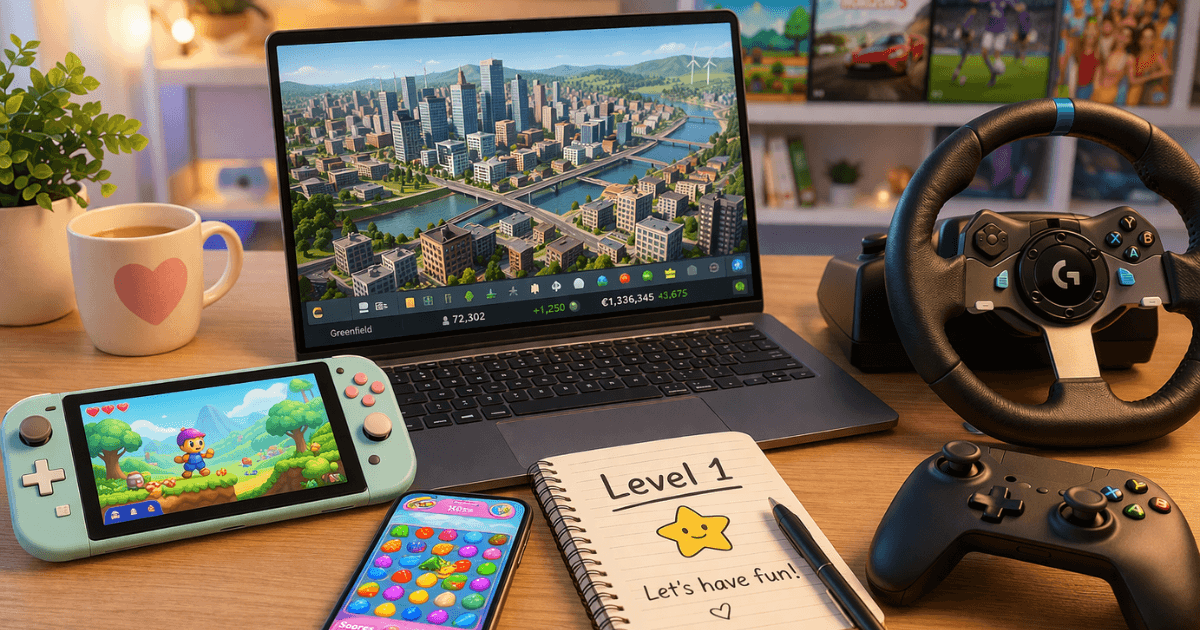
Genres organize games by what you do in them. Puzzle games make you think. Shooters make you react. Role-playing games make you grind and grow. But here's the thing: most games don't live in just one box. A game might be part puzzle, part shooter, part story. Genres overlap. Subgenres multiply. And trying to pin everything down is a losing game.
Why Genre Matters When You’re New
There are millions of games. Studios release thousands of new ones every year. Yeah, the categories aren't perfect—but they give you a vibe check. Knowing what you're getting into before you spend $60 and twenty hours on the wrong game is worth more than a perfect taxonomy.
8 Most Popular Video Game Genres Ranked by Difficulty in 2026
Let’s take a look at eight of the most popular video game genres in 2026.
We’ve roughly ranked them from beginner-friendly to more advanced, so you can get a sense of where to start. Keep in mind, this isn’t a strict ranking. It’s based on general player discussions (like Reddit) and our own experience, so use it as a guide, not a rule.
Puzzle Games(🌟)
If you enjoy figuring things out, puzzle games are a great place to start. They’re usually slower-paced and more relaxed. Instead of reacting quickly, you take your time and think. The fun comes from that “aha” moment when everything clicks.
Some common types include logic puzzles, physics-based puzzles, and match-based puzzles. And many puzzle games are often free.
Examples: Minesweeper (logic puzzles), Portal (physics-based puzzles), Candy Crush Saga (match-based puzzles)
Sports & Racing Games (🌟🌟)
Sports and racing games could be your type if you enjoy competition and fast-paced control. Whether you're scoring a goal or taking a sharp turn at high speed, the focus is on reacting in the moment and staying in control. Some games aim for realism, while others offer a more arcade-style experience that’s easier to pick up. Most of these games require purchase.
Examples: FIFA (football simulation), Forza Horizon 5 (racing), Football Manager (sports management)
Simulation Games(🌟🌟)
Enjoy building things or creating your own world? Try simulation games. Instead of following a fixed path, you decide what to do and how things develop. Some simulation games aim for realism, like flying a plane or running a city. Others are more open-ended and creative, often blending into sandbox-style gameplay. Most simulation games are paid.
Examples: Cities: Skylines II (city-building), Microsoft Flight Simulator 2024 (vehicle simulation), inZOI (life simulation)
Action Games(🌟🌟🌟)
If you enjoy fast-paced gameplay and staying on your toes, action games are a great pick. You’re constantly moving, fighting, and making split-second decisions. It can feel intense, but that’s exactly what makes it exciting. These games range from free-to-play shooters to premium titles.
Examples: Call of Duty (shooter), Prince of Persia: The Lost Crown (platformers), Tides of Annihilation (hack-and-slash), Street Fighter (fighting)
Adventure Games(🌟🌟🌟)
If you enjoy exploring new places and getting pulled into a story, adventure games are a great choice. They’re all about discovery. You move through new environments, piece things together, and slowly uncover what’s going on. It’s less about speed and more about curiosity. Many adventure games also mix in action or RPG elements, adding combat or character progression on top of the story.
Examples: Centum (point-and-click adventures), Eternal Strands (action-adventure), The Walking Dead (visual novel)
RPG Games (🌟🌟🌟🌟)
RPGs focus on character progression. They often function like a coming-of-age experience. You start weak, take on challenges, and gradually become stronger. Along the way, you explore a larger world and shape your own journey. Some RPGs focus more on story and structure. Others lean into action or multiplayer, mixing in faster gameplay or shared experiences with other players.
Examples: Crimson Desert (ARPG), Final Fantasy VII Rebirth (JRPG), World of Warcraft (MMORPG)
Sandbox Games(🌟🌟🌟🌟🌟)
Sandbox games give players a high degree of freedom. Instead of following a fixed storyline, you are allowed to set your own goals however you like. To some extent, they are similar to simulation games, which emphasize real-world modeling and systems. As a result, a mix of simulation and sandbox elements is quite common. However, sandbox games can also combine survival, crafting, or RPG elements.
Examples: Abiotic Factor (survival crafting), Enshrouded (open-world sandbox)
Strategy Games(🌟🌟🌟🌟🌟)
Strategy games call for players to have a top-down or “omniscient” perspective. To achieve victory, you need to plan in advance, manage resources wisely, and adapt your tactics flexibly. It’s like building a world from zero to everything.
Examples: Age of Empires IV (RTS), Civilization VII (TBS), Stellaris (grand strategy)
Quick Comparison of Game Genres
Genre | Difficulty | Price Range | Core Experience | Hardware Needed |
Puzzle | ⭐ | Free → Low | Logic solving, pattern recognition, relaxed thinking | Low (mobile/low-end PC is enough) |
Sports & Racing | ⭐⭐ | Mid → High | Timing, control, competition, fast-paced matches | Medium (console or mid-range PC recommended) |
Simulation | ⭐⭐ | Mid | System management, creativity, and real-world emulation | Medium to High (depends on complexity, PC recommended) |
Action | ⭐⭐ | Free → Mid | Reflex-based combat, fast-paced gameplay, skill execution | Medium (smooth performance recommended, console or PC) |
Adventure | ⭐⭐⭐ | Mid | Exploration, storytelling, puzzle-solving | Low to Medium (most devices supported) |
RPG | ⭐⭐⭐⭐ | Mid → High | Character progression, story immersion, long-term growth | Medium (long playtime, stable performance preferred) |
Sandbox | ⭐⭐⭐⭐⭐ | Mid | Freedom, exploration, player-driven goals | Medium to High (large worlds may require better hardware) |
Strategy | ⭐⭐⭐⭐⭐ | Mid → High | Planning, resource management, tactical decision-making | Low to Medium (high-end PC helps for complex simulations) |
Suggestions for Choosing Video Games for Beginners
- Start with Simple Controls: The early stage is when you’re most likely to give up. The reasons can be difficult controls, a lack of progress, and so on. So start with something simple that gives you quick positive feedback.
- Watch Gameplay Videos: If you’re not sure whether a game is right for you, search for gameplay videos on YouTube. You can watch official trailers or videos from content creators. They give you a quick overview before you spend any time or money on it.
- Don’t Be Afraid to Explore: Your taste in games may change over time. A genre you dislike now could become your favorite later. Once you feel more comfortable, try branching out and exploring something new.
- What If Like Multiple Genres?
That’s completely normal.
Many games don’t fit into just one category. In fact, a lot of modern games mix different genre elements together to create a more layered experience.
Here are a few well-known examples of genre overlap:
- inZOI: Simulation × Sandbox
- Cities: Skylines II/ Stellaris: Simulation × Strategy
- Forza Horizon 5: Simulation × Sports
- Final Fantasy VII Rebirth: Action × RPG
- The Witcher 3: Wild Hunt: Action × RPG × Adventure
Still not sure? Try a fun quiz to get some inspiration.
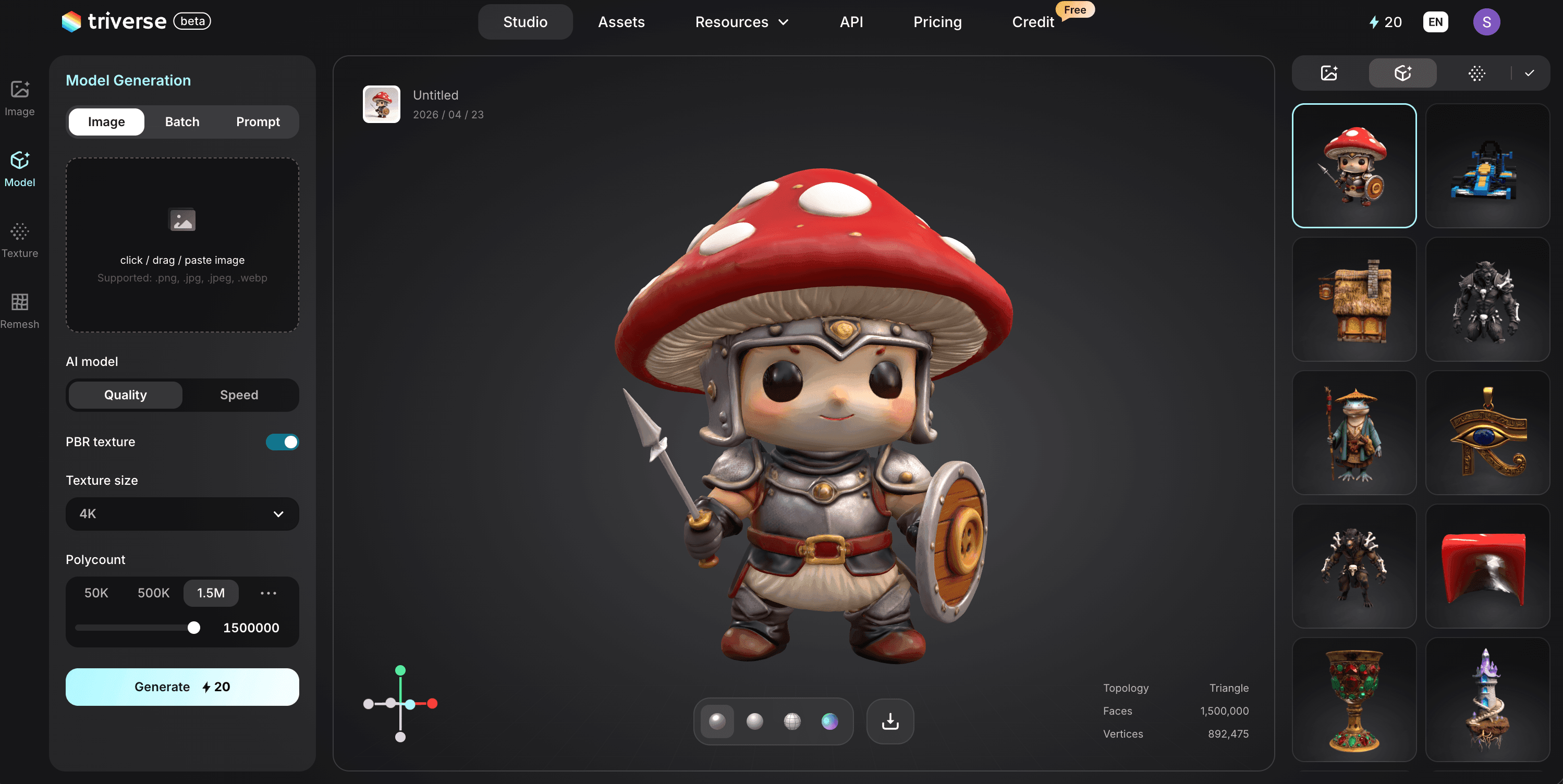
Make Your Own Video Game Assets by Using Triverse AI
After exploring these game genres, you might be thinking, “Could I actually make something like this myself?”
The short answer is yes.
Game development isn’t just for professionals. It’s really about curiosity, creativity, and being willing to try things out. And understanding different genres is already a great first step.
Instead of learning complex 3D software from scratch, you can simply describe what you need or upload a reference image. Triverse AI can generate a 3D model for you in just a few minutes. Once it’s ready, you can bring it straight into engines like Unity or Godot.
Conclusion
Getting into video games doesn’t have to be complicated. With so many video game genres out there, the best place to start is simply with something that looks fun to you.
There’s no single “best” genre. It’s all about what feels right for you at the moment.
As you try more games, you’ll naturally figure out what you enjoy and build your own taste over time.
And if you ever feel like taking it a step further, you can even start creating your own game assets using tools like Triverse AI.