Future of 3D Printing in 2026: 7 Trends Changing the Industry
Explore 7 real trends shaping the future of 3D printing in 2026. From AI-driven modeling to new materials, construction, and manufacturing at scale.
April 29, 2026
In 2025, China exported 502.6 million 3D printers in a single year. Nearly ¥10 billion in investment flowed into the industry. At Formnext in Frankfurt, 38,000 professionals showed up. The largest crowd in the event's history.
The future of 3D printing is happening now, and for the first time, the numbers back up the excitement. This guide cuts through the noise: seven real trends reshaping the future of 3D printing, grounded in data and honest about what's still broken.
What Is the Future of 3D Printing?
3D printing (also called additive manufacturing) has been around in some form for nearly 50 years. For most of that time, it was a prototyping tool. Expensive, slow, limited to plastics, and locked behind specialized CAD skills. Useful for making one-off models, not for running a business.
2025 changed that narrative.
The combination of AI-driven automation, new materials that work in demanding environments, and manufacturing systems finally passing the cost-speed-quality triple threshold means 3D printing is no longer just about making prototypes. It's becoming a legitimate production technology across aerospace, healthcare, consumer electronics, and construction. The market is responding. Investment is flowing, talent is moving in, and the technology is starting to earn its place in actual supply chains. Not just trade show floors.
The trends covered here aren't predictions. They're already happening.
AI Integration in 3D Printing
The modeling bottleneck has been the hardest wall to climb in 3D printing. Getting from an idea to a printable file traditionally requires CAD expertise, 3D software proficiency, and hours of work. Even for a simple part. That's kept a lot of potential users on the sidelines.
AI is dismantling that wall, and it's happening faster than most people realize.
How AI Changes the 3D Modeling Workflow
The traditional pipeline looks like this: concept sketch → CAD software (hours to days) → export STL → slice → print. Each step requires different tools and different skills. A product designer with a great idea might wait a week to get a physical prototype back from a print service.
The AI-assisted pipeline collapses that timeline dramatically. Tools like Meshy, Tripo, and Rodin can generate a usable 3D model from a text description or a single image in seconds. The model comes out as an STL file, ready to slice and print. (We compared the leading AI 3D model generators in a separate article if you're weighing options.) What used to take a week of back-and-forth with a CAD technician now takes minutes of prompting.
This isn't replacing CAD for engineering-grade precision work. An aerospace bracket with specific load-bearing requirements still needs a structural engineer and validated geometry. But for the vast majority of use cases, AI generation is already good enough and getting better fast. Game assets, hobby prints, architectural models, functional prototypes.
Real workflow example: a product designer uploads a photo of a handcrafted prototype to an AI tool. The tool generates a clean 3D mesh in under a minute. That mesh is exported as an STL, imported into Bambu Studio, oriented optimally, sliced, and sent to print. The turnaround from photo to physical part: under two hours.
Creating 3D Models with AI: A Practical Example
Among the tools making this workflow accessible, Triverse AI stands out for its focus on print-ready output. Unlike general-purpose 3D generators that often require cleanup, Triverse is designed with makers and product teams in mind.
The process is straightforward: upload a reference image or describe what you need, and Triverse generates a production-quality 3D model. You can export directly as STL, OBJ, or GLB, the formats most desktop slicers accept. For complex or highly detailed models, some manual inspection may still be necessary, but the baseline quality is high enough that many prints go straight from export to slicer.
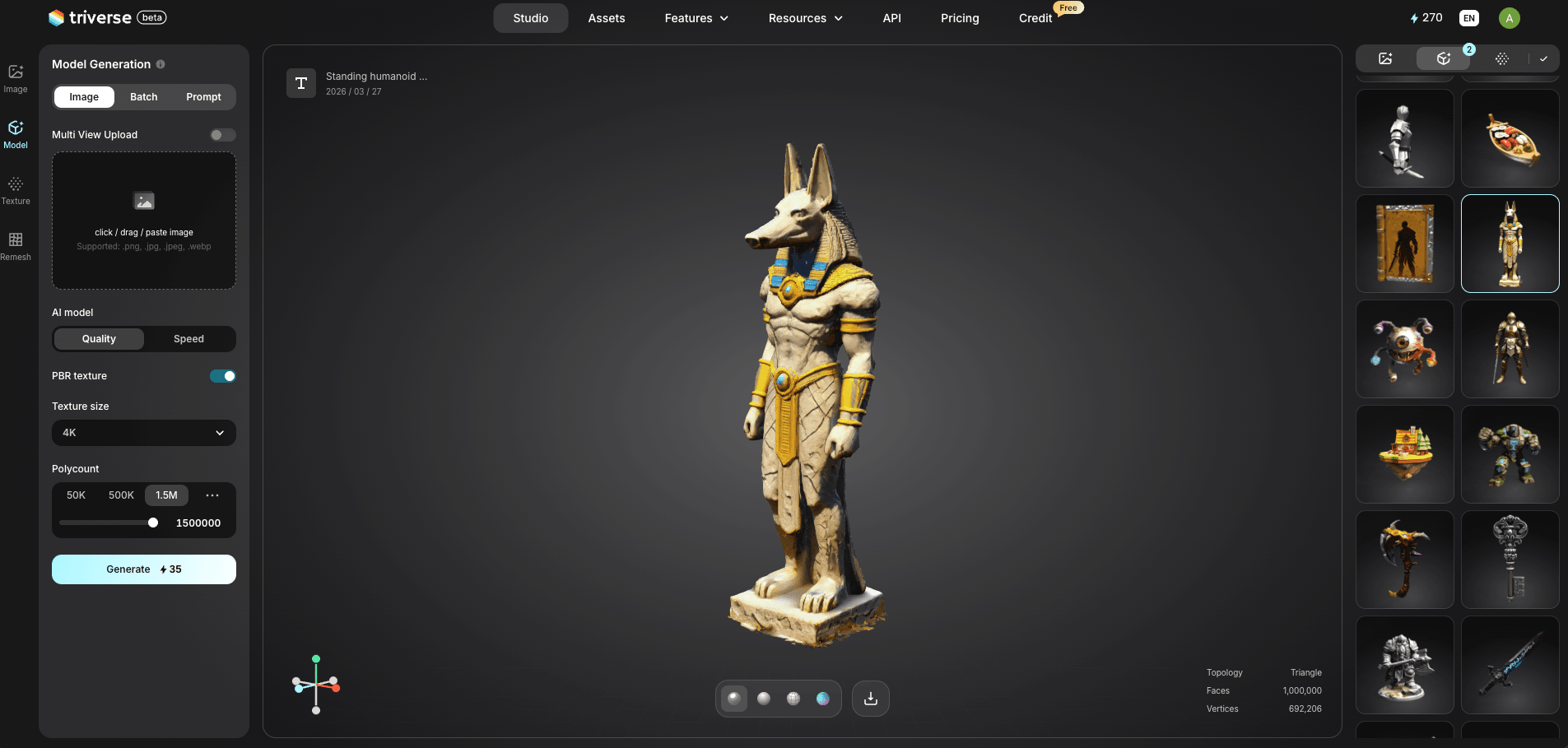
What makes this practical for 3D printing isn't just the generation speed. It's the combination of image-to-3D accuracy, topology that holds up under slicing, and a format pipeline that works with your printer's software. For makers without CAD experience who have ideas they want to see in physical form, this is the missing link. You can try it at triverse.ai.
AI Tools Applied to the 3D Printing Process
AI is also changing what happens after the model is ready. Slicing software has traditionally required significant manual tweaking: orientation, support placement, density, infill patterns. The layer-by-layer planning that tells the printer how to print. Get it wrong and you get a failed print, wasted material, and hours lost.
AI-assisted slicing tools like Bambu Lab's Auto Preparation and emerging AI slicers are automating this. They can predict print failure before it happens, optimize orientation to minimize support material, and adjust parameters based on the specific printer and material combination. (The right support strategy makes a big difference—tree supports, for instance, can cut material use by 30–50% on organic shapes.) The result: fewer failed prints, less waste, and a lower skill floor for newcomers.
The impact on print quality is measurable. Teams running AI-assisted slicing report failure rates dropping by 15–30% on complex prints. Significant when you're running a production operation where each failure costs material and time.
AI's Impact on Automated 3D Printing Manufacturing
The biggest shift isn't in hobbyist workflows. It's in factories.
AI-driven 3D printing is enabling fully autonomous printing facilities: 24/7 operations where machines monitor their own health, predict maintenance needs, and self-correct print parameters in real time. Siemens, EOS, and TRUMPF are all building or demonstrating systems along these lines. The goal isn't just to run printers faster. It's to run them without human intervention for extended periods.
For businesses, this changes the unit economics. Labor has always been a major cost in additive manufacturing. Not just the printing itself, but the setup, monitoring, and post-processing. AI that handles the monitoring and self-correction piece significantly reduces the human-hours per printed part.
Advanced 3D Printing Materials
New materials are arguably the most underrated driver of 3D printing's future. The technology gets a lot of attention for being faster or smarter. But what unlocks entirely new industries is material capability.
Beyond PLA: Engineering-Grade 3D Printing Materials
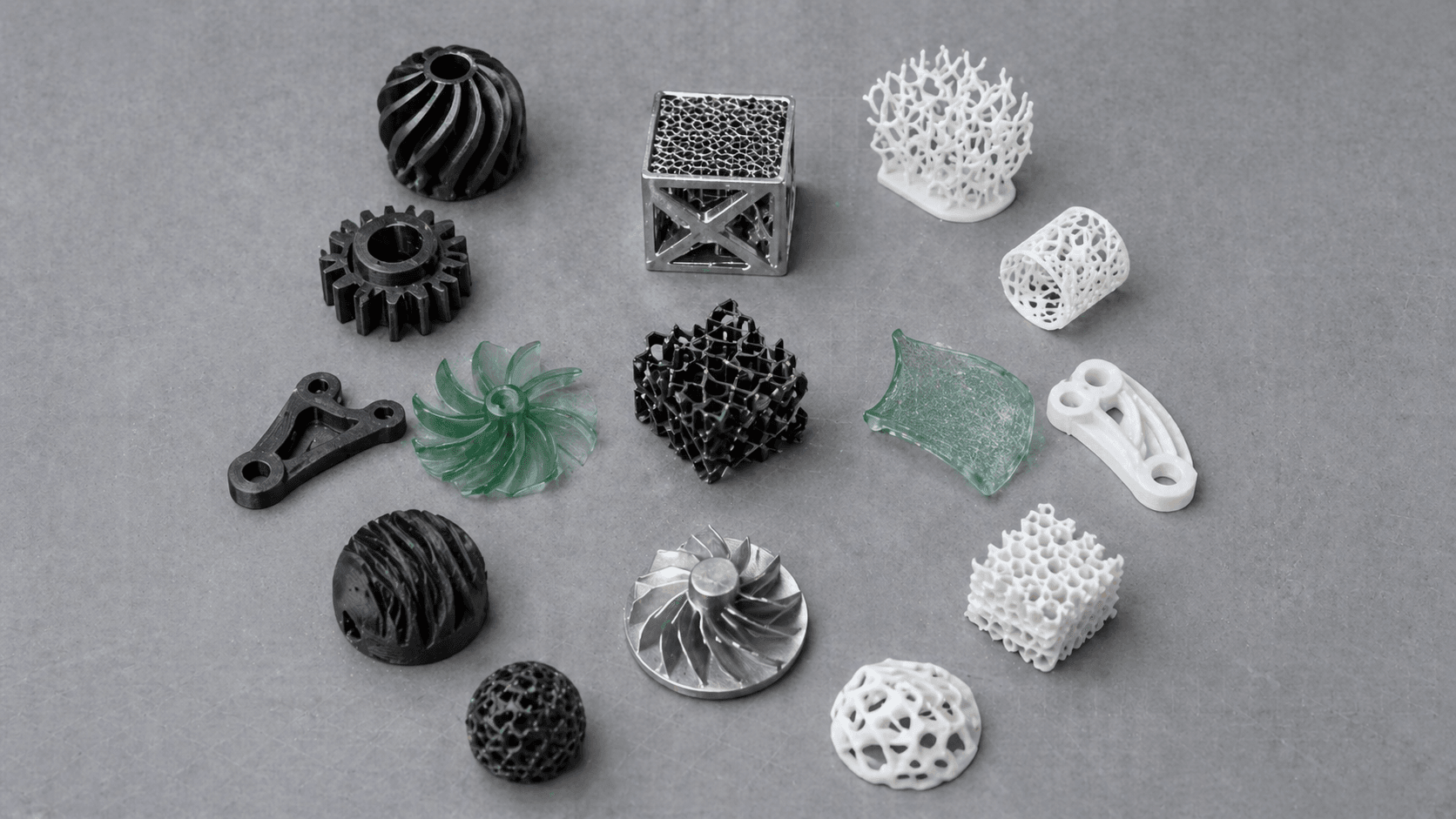
For most of 3D printing's history, the material debate was PLA vs. ABS. Fine for prototypes and hobby prints. Not fine for anything that needed to survive real stress, heat, or chemical exposure. (New to materials? The main 3D printer filament types—PLA, PETG, TPU, nylon, and the engineering grades—each have distinct trade-offs.)
That's changed. High-performance polymers like PEEK and ULTEM now print reliably on industrial machines and are used in aerospace, automotive, and medical device applications. Metal 3D printing, once a multi-hundred-thousand-dollar commitment, has dropped in cost enough that more workshops can access titanium, stainless steel, and tool steel printing.
The practical implication: parts that used to require CNC machining or casting can now be printed. That shifts what's possible for small-batch production, custom parts, and complex geometries that are difficult or impossible to machine conventionally.
Metal 3D Printing for Industrial Applications
Metal additive manufacturing crossed a threshold in 2025. Leading companies, including Chinese firms like Bright Laser Technologies (铂力特), developed "intelligent factory" solutions for metal 3D printing that simultaneously meet the cost, speed, and yield requirements for actual production runs. Aerospace brackets, orthopedic implants, and consumer electronics structural parts are now being produced at volume through metal 3D printing, not just prototyped.
The aerospace industry has been the earliest large-scale adopter. GE has been printing fuel nozzles for the LEAP engine for years. The 2025–2026 shift is that the technology is proving itself in increasingly demanding environments: heat exchangers, turbine blade repair, satellite structural components.
Biocompatible 3D Printing Materials and Living Tissue
3D printing in healthcare is where material innovation gets most personal.
Bioprinting, printing with living cells and biocompatible materials, is moving from research labs to early clinical use. Tissue scaffolds, patient-specific surgical guides, and custom-fit prosthetics are already being produced in hospitals. The path from "implant made from a bioprinter" to "functional organ replacement" is still measured in decades, but the near-term trajectory is clear: patient-matched implants and medical devices will become routine in the next 10 years.
The regulatory environment is evolving alongside the technology. FDA approvals for 3D-printed medical devices have been accelerating. Dentists are already using 3D-printed surgical guides and orthodontic aligners routinely.
Sustainable 3D Printing Materials and Recycled Filament
Sustainability in 3D printing isn't just a marketing claim. It's an engineering constraint and a market pressure.
The industry is addressing it on multiple fronts: recycled PET filament, bio-based polymers (PLA from corn starch rather than petroleum), and closed-loop recycling programs where failed prints are reprocessed back into usable filament. Major filament manufacturers are expanding their recycled material ranges, and the performance gap between virgin and recycled materials is narrowing.
For businesses, this matters because supply chain sustainability requirements are increasing. Manufacturers in aerospace and automotive are under pressure to reduce waste and document material sourcing. 3D printing's layer-by-layer approach inherently produces less scrap than subtractive manufacturing (CNC machining, for example), and the material efficiency story is getting stronger.
3D Printing in Construction
3D printing in construction has a PR problem. Early "3D printed house" announcements were genuinely impressive as proof-of-concept. But for years, the gap between "impressive demo" and "buildable at scale" seemed unbridgeable.
In 2025–2026, that gap is finally closing.
3D-Printed Buildings and Urban Infrastructure
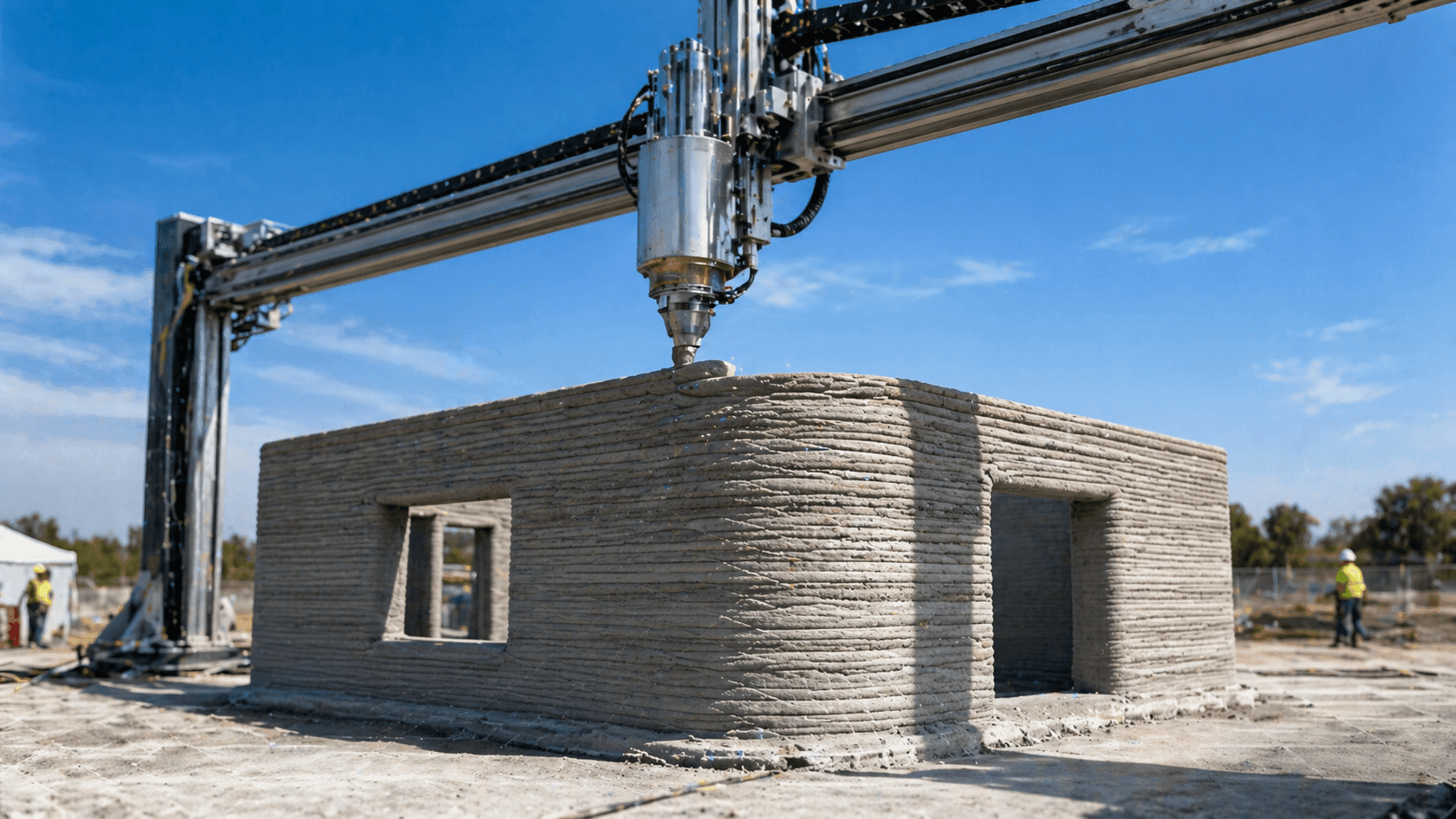
Projects in Dubai, the United States, and China have moved past single-wall demonstrations to actual habitable structures. The technology's advantages for construction are real: less material waste (only the structure is printed, no formwork), faster construction timelines, and reduced labor costs in regions facing skilled trades shortages.
ICON, the Austin-based construction 3D printing company, has printed entire neighborhoods in Texas. In China, 3D-printed infrastructure components like utility housings, drainage elements, and public furniture are appearing in urban development projects. The Shenzhen metropolitan area, specifically, has been integrating 3D printing into smart city infrastructure builds.
The architectural freedom is real, too. Complex organic forms that would be cost-prohibitive with traditional formwork become achievable with 3D concrete printing. Some architects are designing structural elements specifically to take advantage of the technology's capabilities. Not just printing standard shapes faster.
Eco-Conscious 3D Printed Construction and Scalability
The sustainability angle for construction 3D printing is significant. Concrete 3D printing typically uses 30–60% less material than conventional cast-in-place methods, because the structure is optimized rather than relying on uniform cross-sections. Combined with the ability to use lower-grade or waste-derived aggregates in the mix, the carbon footprint per unit of built area improves meaningfully.
The bottleneck isn't the technology anymore. It's regulation, building codes, and workforce training. Those are solvable problems. Governments in China, the UAE, and the US are actively working through them.
Medical Applications of 3D Printing
Healthcare is where 3D printing's ability to produce patient-specific geometry at reasonable cost has the most immediate human impact.
Bioprinting and Prosthetics
Regenerative medicine through bioprinting is no longer science fiction confined to research papers. Bio-inks containing living cells can be printed into tissue scaffolds that support cell growth and integrate with the body's existing biology. The current frontier is functional tissue replacement: skin grafts, cartilage repairs, bone reconstruction. Rather than full organ printing.
The timeline for complex organ bioprinting remains long, measured in decades rather than years. But the stepping-stone applications are here now and improving rapidly.
Custom prosthetics have been transformed. A 3D-printed prosthetic that fits a patient's exact anatomy, generated from a scan, can be produced in days rather than weeks, at a fraction of the traditional cost. For pediatric patients who outgrow prosthetics quickly, the economics of 3D printing are transformative.
Custom 3D Printed Medical Devices and Implants
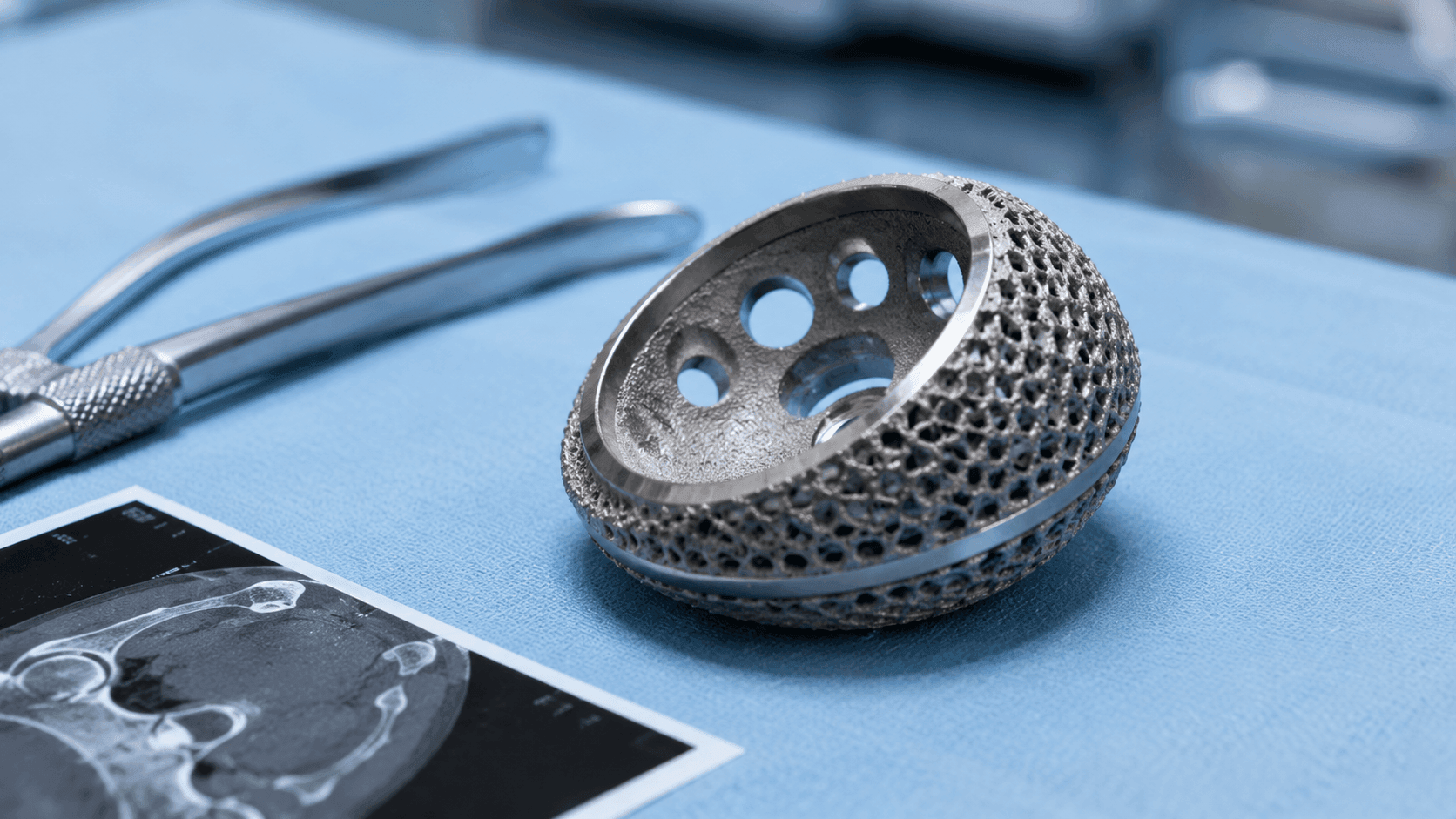
The orthopedic implant industry is the largest near-term beneficiary of medical 3D printing. Patient-specific knee, hip, and spinal implants, matched to the patient's anatomy via CT scan, improve surgical accuracy, reduce revision rates, and speed recovery times.
Anatomically accurate surgical guides, printed from sterilizable materials, help surgeons plan and execute complex procedures with greater precision. What used to require custom-machined guides from a medical device company with weeks of lead time can now be printed in-house at a hospital with a production-grade 3D printer.
Drug delivery systems are an emerging frontier. 3D printing allows precise control over drug release geometry: a pill printed with internal channels and reservoirs that release medication at controlled rates. This enables targeted therapy with reduced side effects, particularly for cancer treatment and chronic disease management.
The Future of 3D Printing in Manufacturing
Manufacturing is where the paradigm shift from "prototype tool" to "production technology" is most consequential.
From 3D Printing Prototyping to End-Use Production
The most significant development in 3D printing's future isn't a new material or a smarter algorithm. It's the confirmation that end-use production is economically viable.
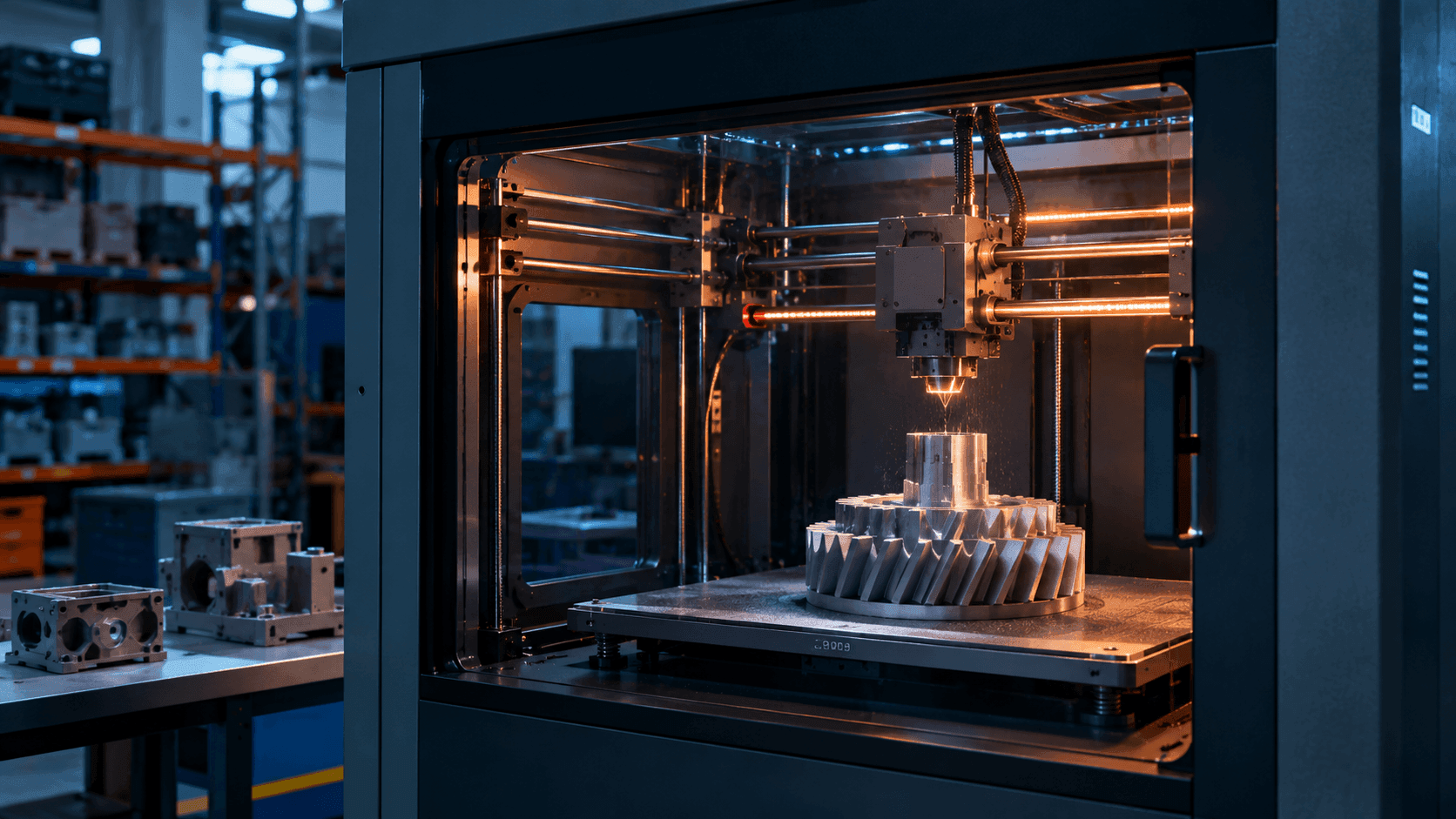
For years, the argument for 3D printing in manufacturing stopped at prototyping: "It's faster and cheaper to iterate." The 2025 inflection point is that the argument now holds for final parts. Metal 3D printing in aerospace, medical implants, and consumer electronics structural components has cleared the cost-quality-speed threshold for production runs. Not just prototypes.
The manufacturing sector calls this additive manufacturing's shift from "rapid prototyping" to "rapid production." It's a semantic distinction with massive implications: once production economics work, the addressable market for 3D printing expands by orders of magnitude.
How 3D Printing Is Reshaping Global Supply Chains
3D printing is reshaping supply chains in a way that's finally getting serious attention: localized production of spare parts, on-demand manufacturing, and the elimination of inventory-driven supply chain risk.
Traditional manufacturing relies on long production runs to achieve unit cost efficiency. That requires large inventories, long lead times, and complex distribution networks. 3D printing inverts this: production runs can be as short as a single part, with no tooling cost and no setup time.
The practical applications are already visible. Automotive manufacturers are 3D printing spare parts for older models on demand, eliminating the need to warehouse parts for cars that haven't been in production for 20 years. Medical device companies are producing patient-specific implants on demand rather than maintaining large implant inventories. Consumer electronics brands are exploring localized repair-part printing to reduce returns processing costs.
On-demand manufacturing also makes supply chains more resilient. The 2021–2022 semiconductor shortage, the 2024 Red Sea shipping disruptions. These exposed how fragile globally distributed supply chains are. If you can print the part, you don't need to wait for a ship to cross an ocean.
Where 3D Printing Still Falls Short
The case for 3D printing's future is strong. But honest coverage requires addressing the gaps.
3D Printing Speed and Cost Barriers
3D printing is still slower than injection molding for mass production of identical parts. A part that can be injection molded in seconds takes hours to print. For consumer products at a millions-of-units scale, conventional manufacturing wins on speed and unit cost.
The cost barrier is real for metal powder bed fusion and high-performance polymer printing. A production-grade metal 3D printer still runs $200,000–$1,000,000+. Material costs, especially for metal powders and high-performance polymers, remain significant. Small shops and individual makers can access the technology through service bureaus, but full in-house production requires substantial capital.
Speed improvements are coming. Continuous 3D printing technologies, where the build platform moves continuously rather than in discrete layer steps, can achieve 10x or greater speed improvements over conventional layer-by-layer approaches. Several companies are commercializing these systems, though full production-scale adoption is still 2–5 years away.
3D Printing Materials Property Gaps
Not all engineering materials are printable. Thermal properties, isotropy (uniform strength in all directions), and long-term durability under stress remain genuine concerns for structural applications. Aerospace and medical device manufacturers invest heavily in material qualification, testing that a printed part will behave predictably over years of service. That process is expensive and slow.
Standardization is another friction point. A part printed on one machine from one material batch may behave differently from the same part printed on a different machine or a different batch. The industry is working toward tighter standards, but it's a long-horizon problem.
Why Home 3D Printing Isn't Mainstream Yet
Desktop 3D printers have gotten dramatically cheaper and easier to use. A Bambu Lab A1 Mini costs under $200 and produces genuinely impressive results out of the box. The maker community is thriving.
But there's still a meaningful skill and time gap. Designing a print-worthy model, orienting it correctly, dialing in slicer settings, handling failed prints, and doing post-processing work requires real effort. The industry knows this, which is why AI-assisted slicing and auto-configuration are priorities for every major desktop printer manufacturer.
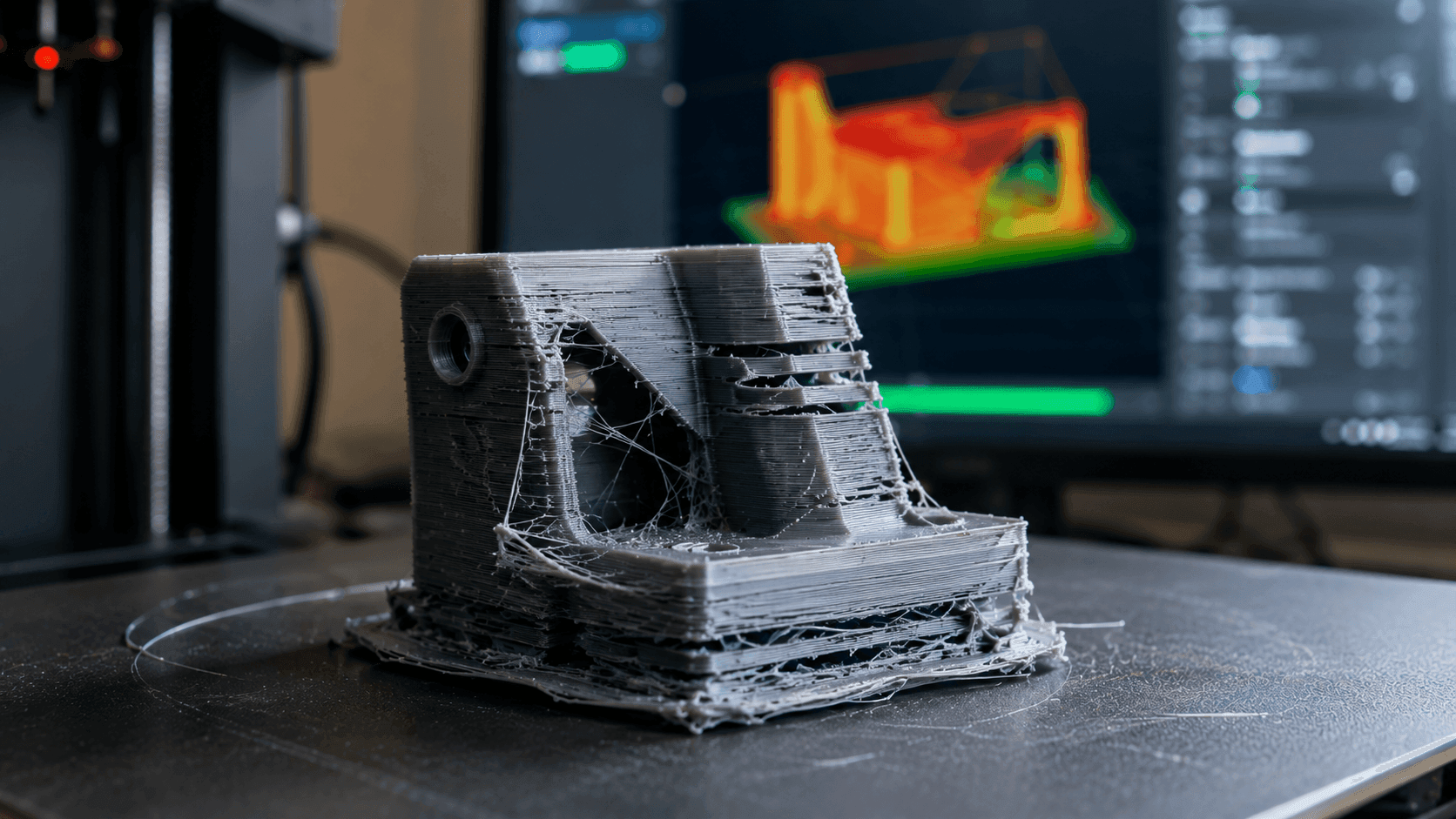
The trajectory is clear. Five years from now, the barrier will be even lower. But the gap between "impressive demo at CES" and "reliable tool in every home" is still real today.
Conclusion: What the Future of 3D Printing Means for You
The future of 3D printing isn't a future to wait for. It's happening now. And there's a practical on-ramp for anyone ready to use it.
For Hobbyists and Makers
The barrier to entry has genuinely never been lower. A capable desktop printer costs less than a gaming monitor. For families considering a first printer, our guide to the best 3D printer for kids covers safe, enclosed options with easy-to-use software. AI tools like Triverse AI eliminate the CAD bottleneck. You can go from a description or a photo to a printable STL file in minutes, no specialized training required. Bambu Lab's ecosystem has made the software side dramatically easier. MakerWorld's community templates give you a starting point for almost any project.
If you've been curious about 3D printing but intimidated by the technical requirements, the window is now.
For Studios and Product Teams
The iteration speed advantage of AI-driven 3D printing is now significant enough to matter in a product development timeline. Physical prototypes used to require days or weeks of lead time and significant CAD investment. Now, a product team can go from a sketch or reference image to a physical prototype in the same day.
For studios working in game development, animation, or product design, where physical props, maquettes, or functional prototypes are part of the workflow, this compression of the prototype cycle is a genuine competitive advantage. The team that can iterate faster ships better products.
Triverse AI is built for exactly this workflow: describe or upload a reference image, generate a production-ready 3D model, export directly as an STL file, and print. No CAD. No specialized training.
Frequently Asked Questions about Future of 3D Printing
What is the future of 3D printing in the next 5 years?
In the next 5 years, 3D printing will move decisively from a prototyping technology to a production technology. AI will collapse the modeling and slicing bottleneck, making the workflow accessible to non-specialists. New materials, especially high-performance polymers and metal alloys, will expand the range of printable end-use parts. Mass production of metal 3D printed parts will become economically viable in aerospace, medical devices, and consumer electronics. Desktop printing will become significantly faster and easier to use, pushing adoption in education, small business, and home use.
How is AI changing 3D printing in 2026?
AI is changing 3D printing in two major ways. First, AI model generation tools (text-to-3D, image-to-3D) are collapsing the CAD bottleneck that kept non-specialists out of 3D printing for decades. Second, AI-assisted slicing and print monitoring are reducing failure rates, optimizing material usage, and enabling automated 24/7 printing operations. The combined effect is a dramatically lower skill floor and a faster path from idea to physical object.
Can 3D printing be used for mass production?
Yes. And 2025 marked the year this became commercially significant, not just technically possible. Metal 3D printed parts are now in production at aerospace companies and medical device manufacturers. Consumer electronics brands are 3D printing structural components and spare parts. The economics work for complex geometries, patient-specific medical devices, and low-to-medium volume production runs. For simple parts at a millions-of-units scale, conventional manufacturing still wins on unit cost.
What are the biggest challenges facing 3D printing today?
Speed remains the primary limitation: 3D printing is still slower than injection molding for mass production. Material costs, especially for metals and high-performance polymers, create a capital barrier for small shops. Standardization gaps across machines and material batches make quality assurance challenging. And the skill gap, while shrinking, keeps desktop 3D printing from being as plug-and-play as a 2D printer.
What materials will dominate 3D printing in the future?
High-performance polymers (PEEK, ULTEM) for aerospace and automotive applications, metal alloys (titanium, stainless steel) for industrial production, and bio-compatible materials for medical devices are all growing rapidly. For desktop printing, recycled and bio-based filaments will become more mainstream as sustainability requirements increase. Conductive filaments for printed electronics are an emerging category with significant potential.
Is 3D printing worth learning in 2026?
Absolutely. And the ROI has never been better. The tools are cheaper, the AI assistance makes the workflow dramatically easier, and the range of printable materials covers a much wider range of real-world applications than even three years ago. Whether you're a hobbyist, a product designer, a game developer, or an engineer, learning the fundamentals of 3D printing and AI model generation will be a durable skill.
How is 3D printing used in healthcare and medicine?
3D printing is used in healthcare for patient-specific surgical guides, custom orthopedic implants, dental aligners, and prosthetics. Bioprinting, printing with living cells, is advancing toward functional tissue replacement. The FDA has approved an increasing number of 3D-printed medical devices, and hospitals are increasingly operating in-house production 3D printing facilities for surgical planning and custom device fabrication.
Will 3D printing replace traditional manufacturing?
Not comprehensively. And the honest answer is that it doesn't need to. 3D printing excels at complex geometries, customization, and low-to-medium volume production. For high-volume simple parts at low unit cost, injection molding and conventional manufacturing remain superior. The shift isn't a replacement. It's additive manufacturing becoming a legitimate option alongside conventional methods in an engineer's toolkit, particularly for aerospace, medical, and consumer product applications.